Ansel Adams: Why the Master of American Photography Still Inspires Us Today
Few names in photography are as universally recognized as Ansel Adams. Known for his dramatic black-and-white landscapes of the American West, Adams transformed photography from a documentary medium into a respected art form. His images are not just beautiful; they are historical, cultural, and environmental touchstones.
While many of his most famous later works remain under copyright, a significant number of his early photographs and U.S. government-commissioned works are now in the public domain. These images provide a fascinating glimpse into both his technical mastery and his enduring influence.
This article will explore why Ansel Adams is considered one of the most important photographers in history, highlight several of his public domain photographs, and explain what modern photographers can learn from his legacy.
How Ansel Adams Inspired Derek Nielsen’s Photography

The Mountrains Call – Limited Edition Fine Art Print of 50 – Derek Nielsen Photography
Look at the photo above and the photo at the top of the page, and you can clearly see I have been inspired by his work for a long time. When I went out to Grand Teton National Park, I wanted to stop at the Snake River Overlook. I wanted to see if I could capture this iconic scene in a way that pays tribute to the late great Adams, but put my own spin on it. The moody clouds and delicate fall colors in the trees were the perfect solution. It makes me smile to see that the view is still as good as it was long ago.
Who Was Ansel Adams?
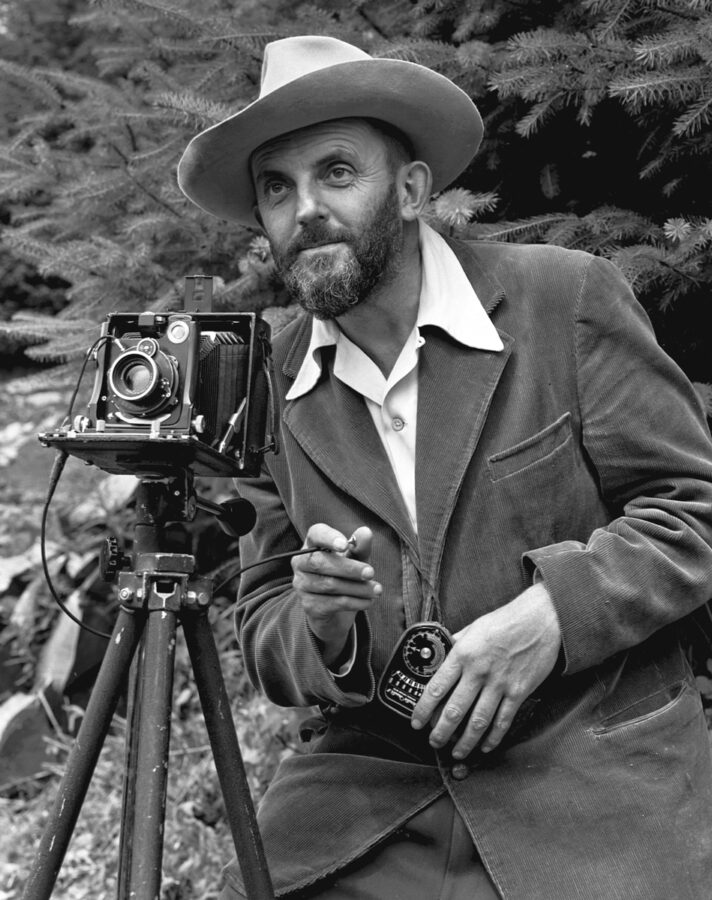

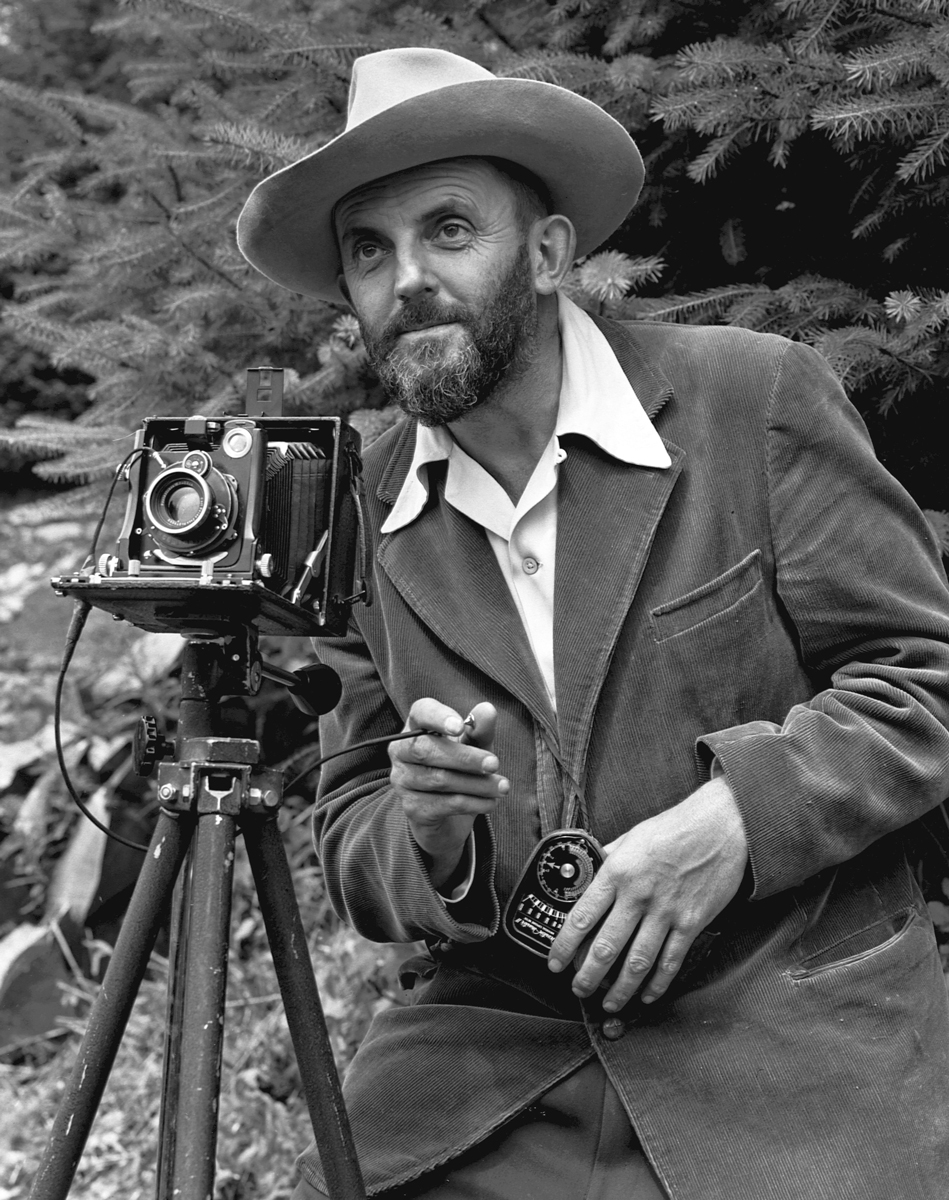
Born in 1902 in San Francisco, Ansel Easton Adams grew up against the backdrop of the rugged California coastline and the towering majesty of the Sierra Nevada. As a child, he visited Yosemite National Park for the first time in 1916, an experience that ignited his lifelong passion for the natural world.
Adams was largely self-taught as a photographer. He experimented with cameras, taught himself darkroom techniques, and eventually studied music an influence that shaped his disciplined approach to photographic composition. By the 1920s, Adams was already producing striking images of Yosemite and the Sierra Nevada, honing the style that would later define his career.
Why Ansel Adams Is Important
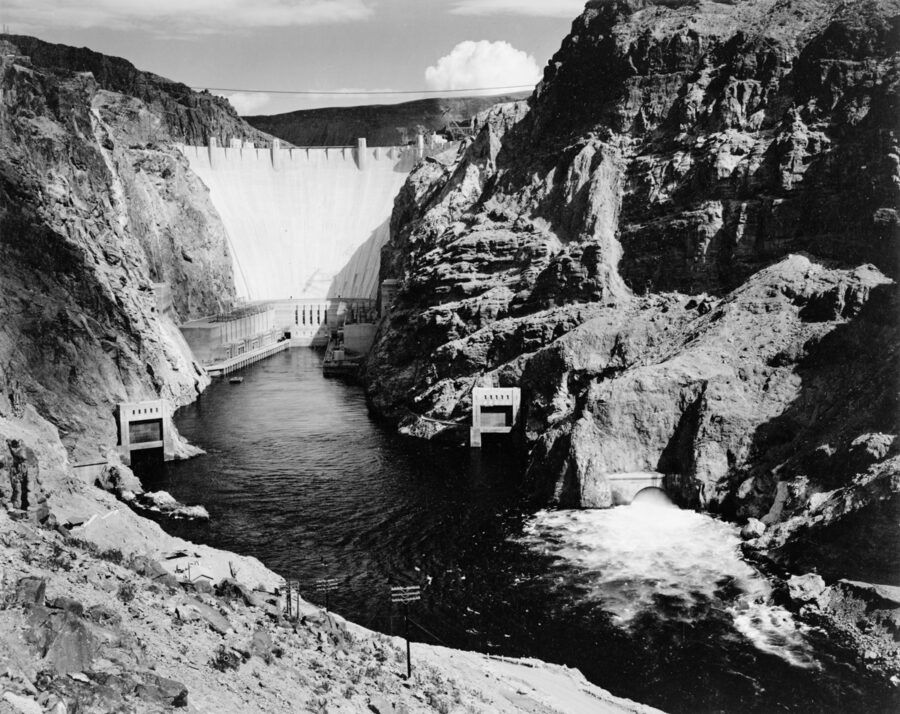
Photograph of the Boulder Dam from Across the Colorado River – National Archives.
Adams’ legacy rests on three pillars:
-
Artistic Innovation
He elevated landscape photography to fine art status, pioneering techniques in exposure, composition, and printing that are still taught today. -
Technical Mastery
Adams co-developed the Zone System, a revolutionary approach to controlling exposure and tonal range. It allowed him to capture scenes with unparalleled clarity and depth. -
Environmental Advocacy
Adams was as much an environmentalist as he was an artist. His images of Yosemite and other national parks were instrumental in raising awareness of conservation issues and even helped influence U.S. environmental policy.
Ansel Adams, The Conservationist

Looking across barren land to mountains, “From Logan Pass, Glacier National Park,” Montana.
Beyond his art, Ansel Adams was a lifelong conservationist who used his photography as a tool for advocacy. His striking images of Yosemite, Sequoia, and other national parks were more than beautiful landscapes they were persuasive arguments for protecting America’s wilderness. Adams was deeply involved with the Sierra Club, serving on its board of directors for nearly four decades. Through exhibitions, publications, and lobbying efforts, he demonstrated how photography could influence policy, inspiring lawmakers and the public alike to support environmental preservation.
One of his most enduring contributions was his ability to blend aesthetics with activism. Adams believed that photographs could reveal the spiritual value of nature, awakening people to the need for stewardship. His images were used in congressional hearings and environmental campaigns, directly contributing to the establishment of new protected lands. In many ways, Adams pioneered the idea of photography as conservation storytelling, a legacy that continues today as photographers use their art to raise awareness about climate change, biodiversity, and sustainability.
Famous Ansel Adams Works in the Public Domain
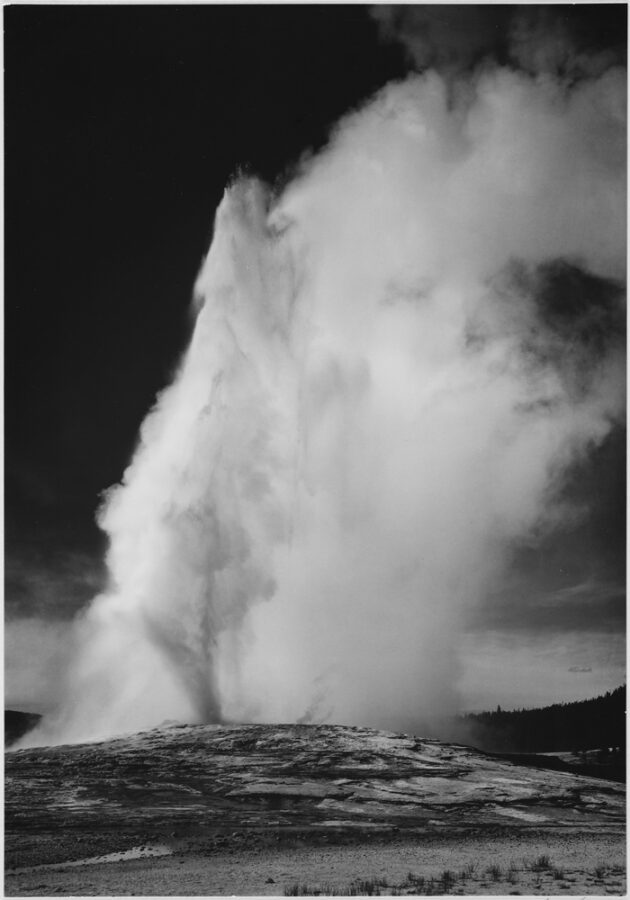
Photograph of Old Faithful Geyser Erupting in Yellowstone National Park
Many of Adams’ best-known images, such as Moonrise, Hernandez, New Mexico (1941), remain copyrighted. But his early works and images created for the U.S. government (notably for the Department of the Interior in the 1940s) are public domain.
Here are a few examples worth exploring:
1. Yosemite Valley, Early Work (1920s)
Adams began photographing Yosemite with a Kodak Brownie camera in his teens. These early works, often shared in public domain collections, reveal his fascination with scale, light, and grandeur.
2. Mural Project Photographs (1941–1942)
Commissioned by the U.S. Department of the Interior, Adams created a series of large-format murals of national parks, including Yellowstone, Glacier, and the Grand Canyon. Because these were government works, they are now in the public domain.
3. Yosemite National Park Photographs (Pre-1929)
Adams’ earliest Yosemite landscapes—before he published Taos Pueblo in 1930 have entered the public domain due to age. They capture the beginnings of his lifelong relationship with the park.
Ansel Adams’ Style and Techniques
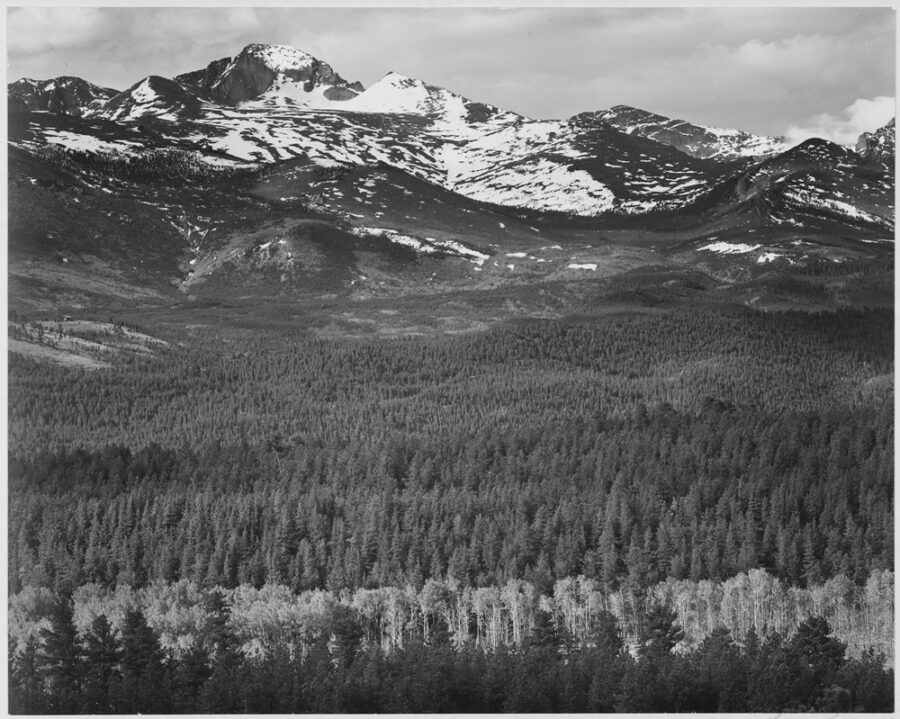
View of Trees and Snow-Capped Mountains, “Long’s Peak from Road, Rocky Mountain National Park,” Colorado
Master of Black and White
Adams believed that black-and-white photography could reveal the essence of a scene without the distraction of color. His prints are known for their rich tonal range, from deep shadows to luminous highlights.
The Zone System
Together with Fred Archer, Adams developed the Zone System, dividing tones into 11 “zones” from pure black to pure white. This allowed photographers to pre-visualize and precisely control exposure and development.
Pre-Visualization
Adams emphasized the importance of “pre-visualizing” an image before pressing the shutter. He would study the light, composition, and emotional impact he wanted, then use his technical skills to bring that vision to life.
Lessons For Modern Photographers Like Myself

Frozen Shores – Limited Edition Fine Art Print of 1 – Derek Nielsen Photography
Even in the age of digital cameras and AI editing tools, Adams’ principles remain relevant:
-
Slow Down and Observe
Adams spent hours studying light and landscapes before taking a single exposure. His patience teaches us the value of intentionality in photography. -
Master Your Tools
Just as Adams mastered film, lenses, and darkroom techniques, today’s photographers should learn to master digital exposure, RAW editing, and composition. -
Tell a Bigger Story
Adams didn’t just create beautiful pictures; he advocated for conservation and linked his art to broader causes. Modern photographers can also use their platforms for storytelling and impact.
Why Ansel Adams’ Work Still Matters
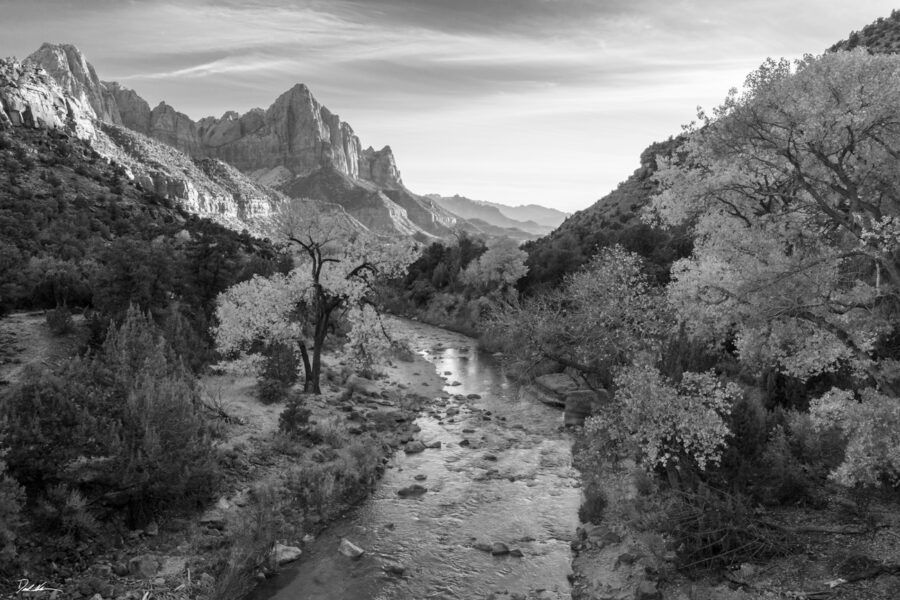
The Watchman (black and white) – Limited Edition Fine Art Print of 6 – Derek Nielsen Photography
Adams’ photographs remain iconic for several reasons:
-
Timeless Beauty: His landscapes transcend trends.
-
Cultural Significance: They symbolize America’s wilderness heritage.
-
Educational Value: His techniques are foundational for photography students.
-
Environmental Relevance: In an age of climate change, his conservation message feels more urgent than ever.
His work and artistic eye are still an inspiration to photographers like me. When I am exploring a new national park, I typically look up the best photographs from that location online. He is still at the top of many lists.
Bringing Ansel Adams Into Your Home
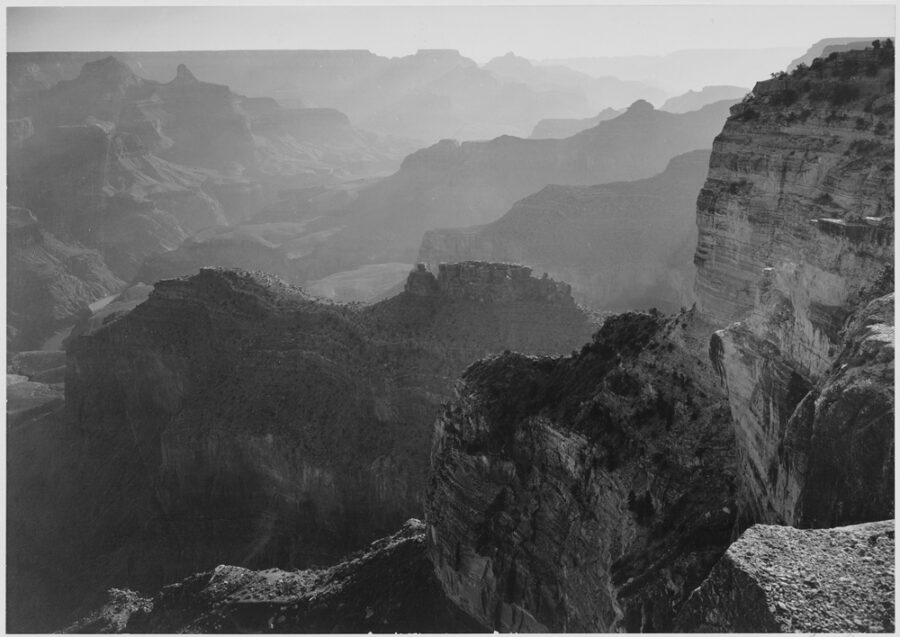
View, Looking Down, “Grand Canyon National Park,” Arizona
Fine art photography collectors continue to seek Adams’ work, but his influence extends beyond original prints. Today, his public domain works can be viewed online through institutions like the Library of Congress.
For collectors of contemporary fine art photography, Adams’ legacy is a reminder of what makes photography powerful: vision, technical mastery, and emotional resonance. Hanging a piece of fine art photography in your home, whether by Adams or modern conservation photographers, creates a daily reminder of beauty, balance, and the need to protect our planet.
A Modern-Day Approach To Ansel Adams’ Landscape Photography
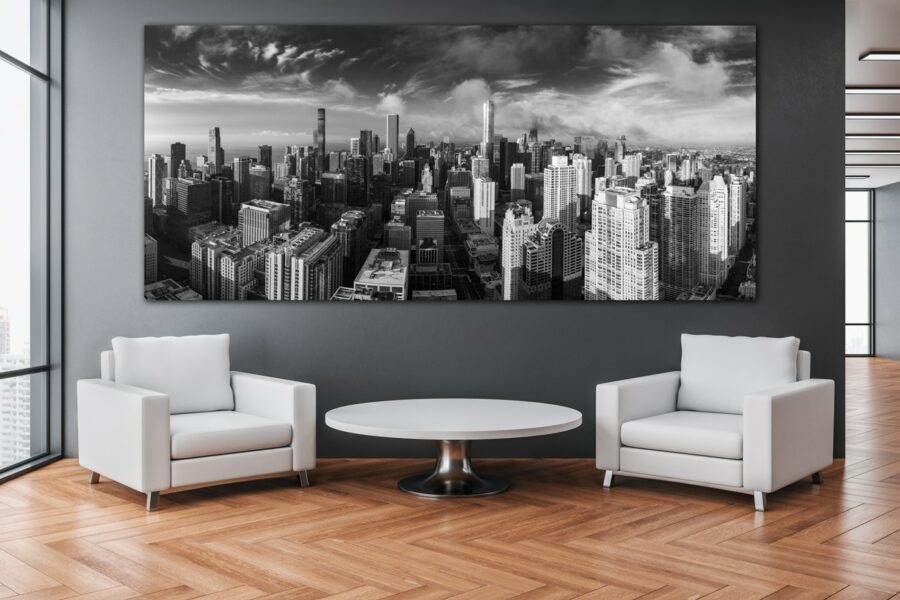
161 Black – Limited Edition Fine Art Print of 50 – Derek Nielen Photography
I started my career as a travel photographer, quickly turning my focus to landscapes. Spending 6 months traveling around South America in my 20s, I gained a new appreciation for wide-open landscapes unobstructed by human development. So much of Ansel Adams’ work resonates with me because of the focus on the raw beauty of the planet.
Even though he passed away in 1984 when I was only 1 year old, his name was familiar in my house, as with many homes across the world. When I think of my own career as a modern-day landscape photographer, I want to be the best at what I do. It is no coincidence that I want to study the greatest to have come before me. Like Ansel Adams’ work, I want my black and white photos to speak so loudly about the subjects. I want the timeless beauty to be a reminder to people for generations. We need to protect these wild spaces forever.
Black-and-white landscape photography has a way of bringing calm, focus, and inspiration into a space. Each print from Derek Nielsen Photography continues the timeless tradition of artists like Ansel Adams, offering a modern perspective on the landscapes that connect us to something larger than ourselves.
Ansel Adams’ Landscapes Will Stand The Test Of Time
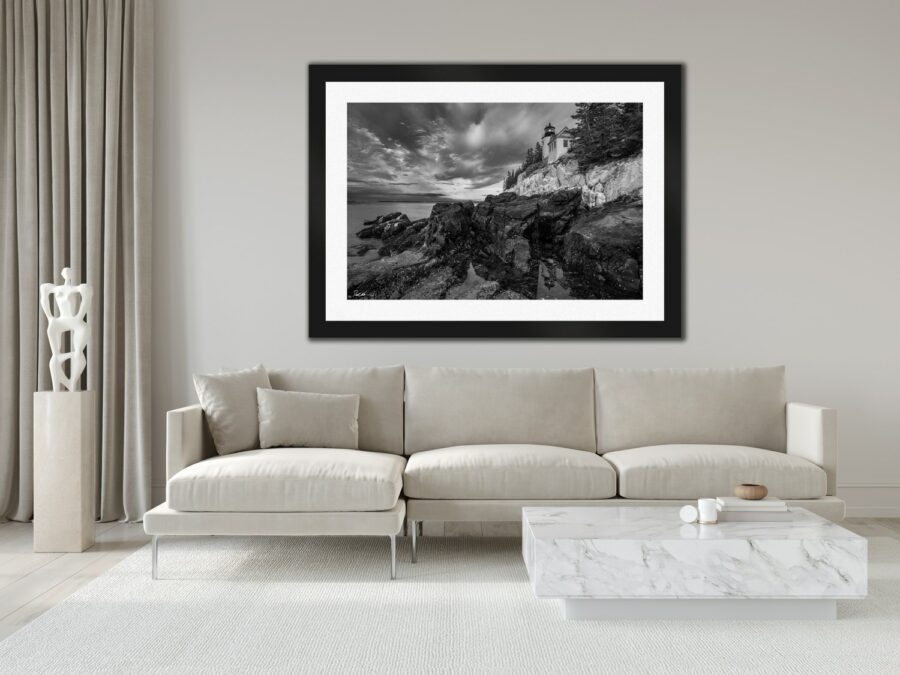
Coast Guardian – Limited Edition Fine Art Print of 50 – Derek Nielsen Photography
Ansel Adams was more than a photographer; he was a visionary who used his camera as both an artistic and political tool. By combining technical mastery with environmental passion, he changed how we see landscapes, art, and the natural world itself.
Exploring his public domain works offers a chance to learn from his genius, appreciate the foundations of modern photography, and draw inspiration for our own creative journeys.
In an era where billions of images are taken every day, Adams’ disciplined approach reminds us of photography’s greatest gift: the ability to turn fleeting moments into timeless legacies.
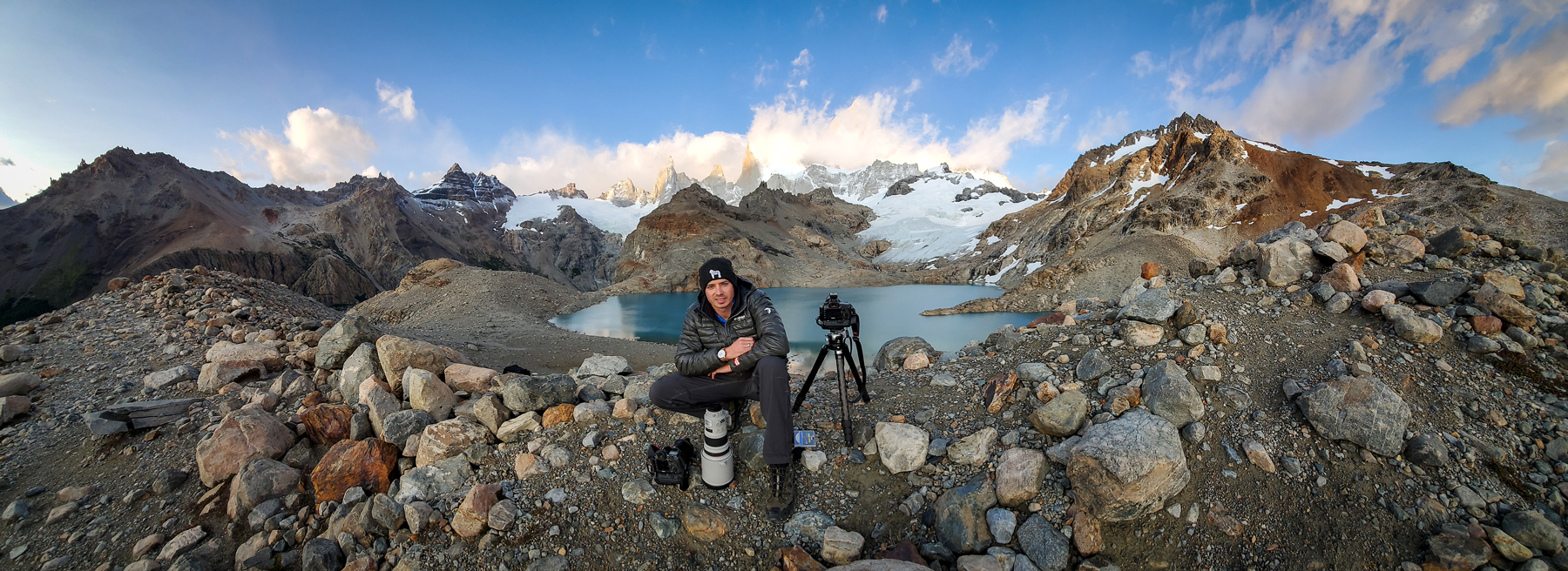
Hello! I'm Derek.
DEREK NIELSEN PHOTOGRAPHY RAISES AWARENESS ABOUT THE GLOBAL NEED FOR CONSERVATION THROUGH PHOTOGRAPHY AND DONATES UP TO 15% OF ALL SALES BACK TO ENVIRONMENTAL ORGANIZATIONS AROUND THE WORLD.