
There are days when I come home from photographing wildlife or wild places and feel more unsettled than inspired. I’ll download the images, sit quietly with them, and instead of feeling gratitude, I feel grief. The animals look smaller than I remember. The landscape feels more fragile. The news running in the background reminds me again that politically, socially, and environmentally, things feel as though they’re unraveling faster than we can respond.
As a nature and wildlife photographer, I live with this tension constantly. We’re drawn to beauty, but we’re also deeply aware of what’s being lost. We see climate change not as an abstract concept, but as altered migration routes, shrinking ice, stressed ecosystems, and once-predictable seasons that no longer behave as expected. It’s hard not to feel pessimistic about the future of America, society as a whole, and the health of the planet when you’re witnessing change through a lens year after year.
This post isn’t about pretending everything is fine. It’s about how I try to stay sane, grounded, present, and emotionally intact while continuing to care deeply about a world that feels increasingly unstable.
Naming the grief we carry to stay sane
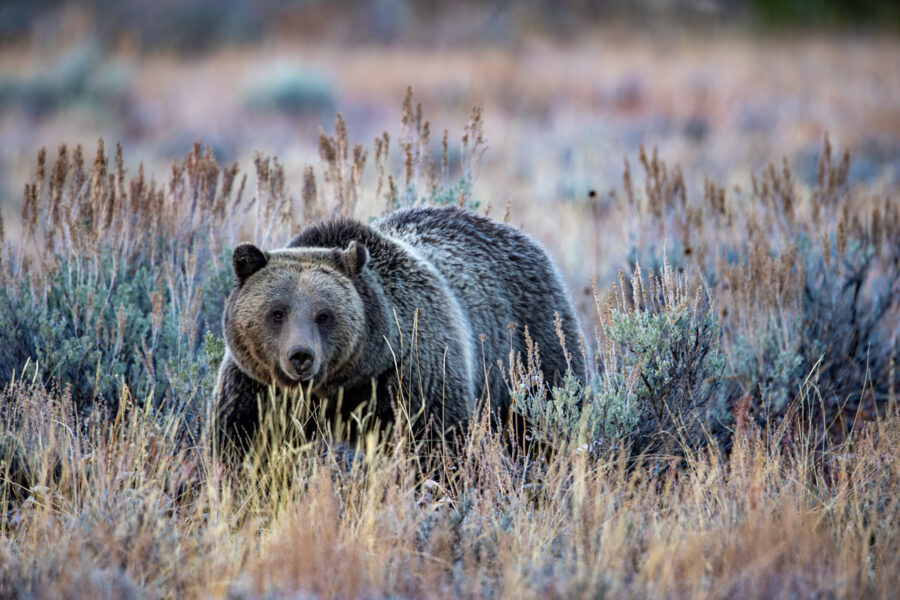
Pastel Beauty – 1 of 1 – Derek Nielsen Photography
What I didn’t realize early in my career is that loving the natural world this much comes with a cost. There is a particular kind of grief that comes from watching places change in ways you know are wrong. It’s the grief of noticing what others might overlook. The absence of sound where birds once filled the air. The quiet anxiety of photographing an animal you know is under pressure, wondering how long that moment will last. This grief doesn’t always arrive dramatically. Sometimes it’s subtle, a heaviness you carry without fully acknowledging it.
For a long time, I tried to push past it. I told myself to stay positive, to focus on the beauty, to be grateful that I even get to do this work. But ignoring grief doesn’t make it disappear. It just buries it deeper. One of the most important things I’ve learned through therapy is to name it honestly: This hurts because I care. That doesn’t make me weak or pessimistic. It makes me attentive. The problem isn’t grief, it’s letting grief quietly harden into hopelessness without being acknowledged.
Awareness has a psychological price
-

- Deforestation in Borneo

-
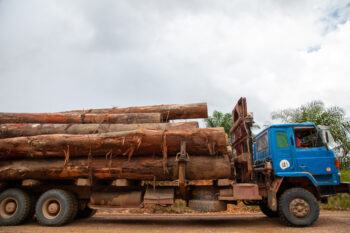
- Logging trucks extracting old growth forest
-
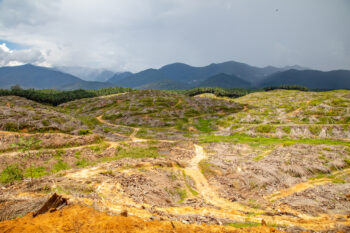
- Endless palm oil plantation where jungle once stood
Photographers, conservationists, and scientists all share a similar burden: prolonged exposure to bad news. We’re paying attention to systems that are under constant stress. Climate reports. Political decisions that undermine conservation. Social divisions that make collective action feel impossible. The nervous system was never designed to process this level of constant alarm. Staying informed matters, but staying constantly plugged in is exhausting. I’ve learned that protecting my mental health sometimes means setting boundaries around information. That doesn’t mean disengaging or pretending ignorance. It means recognizing that doomscrolling doesn’t make me more effective; it just leaves me more depleted.
A simple shift that’s helped:
-
I limit when and how often I consume news. For a long time I realized I was paying for cable news that was just making me miserable. So I cut it completely.
-
I balance consumption with creation.
-
I ask whether what I’m reading helps me act, or just makes me feel worse. The algorithms are designed to keep you engaged but is that driving you deeper into your trib, making you feel anxious, or making you depressed?
If it’s the latter, I step away. That isn’t denial, it’s preservation.
Letting go of the idea that my work has to “save” something
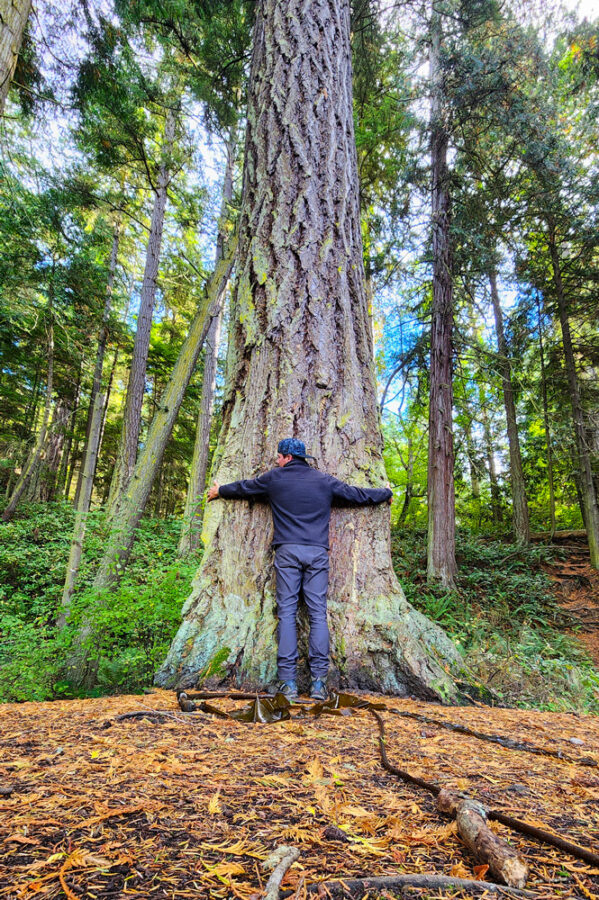
Early on, I think many nature photographers believe consciously or not that powerful images can change everything. That if people see what we see, they’ll care enough to protect it. Sometimes that happens. Often, it doesn’t. When we attach the survival of entire ecosystems to the impact of our photographs, disappointment becomes inevitable. The weight of that expectation can slowly drain the joy from the work. Over time, I’ve had to reframe what photography means to me. I no longer see my role as saving the natural world. I see it as witnessing it. Witnessing is quieter. It’s less heroic but more sustainable. To witness is to say: This existed. This mattered. This was seen with care. That may not feel like enough when the stakes are so high, but it’s honest. And honesty matters. Not every act of meaning needs to fix the problem it documents.
Holding two truths at once
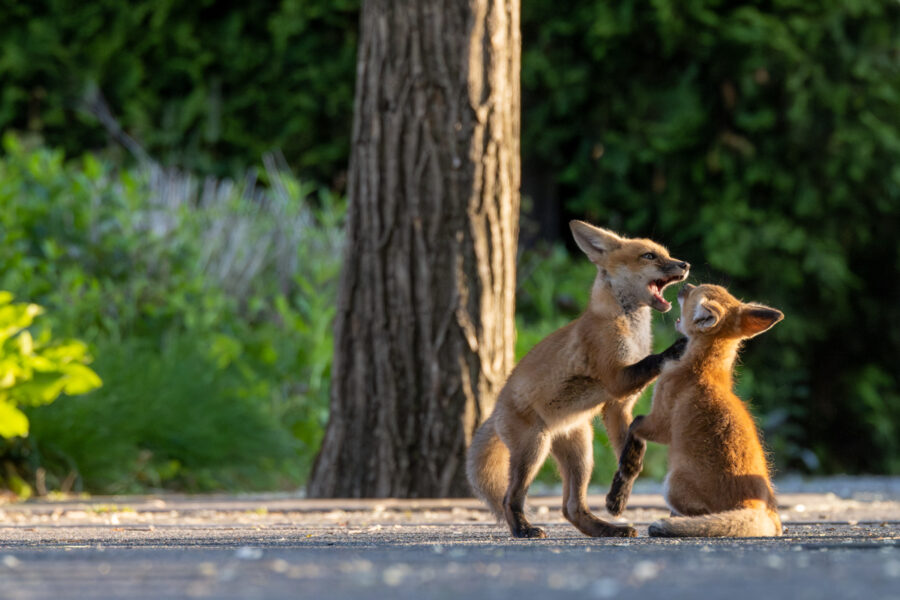
One of the hardest mental traps right now is thinking in extremes: either everything is doomed, or everything will somehow work out. Reality lives in between. Yes, many systems are breaking. Yes, environmental damage is real and accelerating. And at the same time, life continues adapting, responding, persisting in ways that are often surprising. Nature is not delicate in the way we imagine. It is resilient, though often at a cost we find unacceptable. What we’re really grieving is the loss of stability, familiarity, and the illusion that progress was guaranteed.
For me, sanity comes from holding two truths at once:
-
Things are changing in painful, destabilizing ways.
-
Life continues to find expression, even under pressure.
This isn’t blind optimism. It’s humility. It’s recognizing that we are part of a much longer story than the moment we’re currently struggling through.
Shrinking the frame from global despair to local meaning
When the problems feel planetary, it’s easy to feel powerless. One of the most grounding shifts I’ve made is narrowing my focus. Instead of carrying the weight of the entire world, I ask: What can I care for, right here?
That might be:
-
Supporting a local conservation effort.
-
Spending time mentoring another photographer.
-
Helping someone learn to slow down and notice the natural world.
-
Deeply committing to one place instead of worrying abstractly about all places.
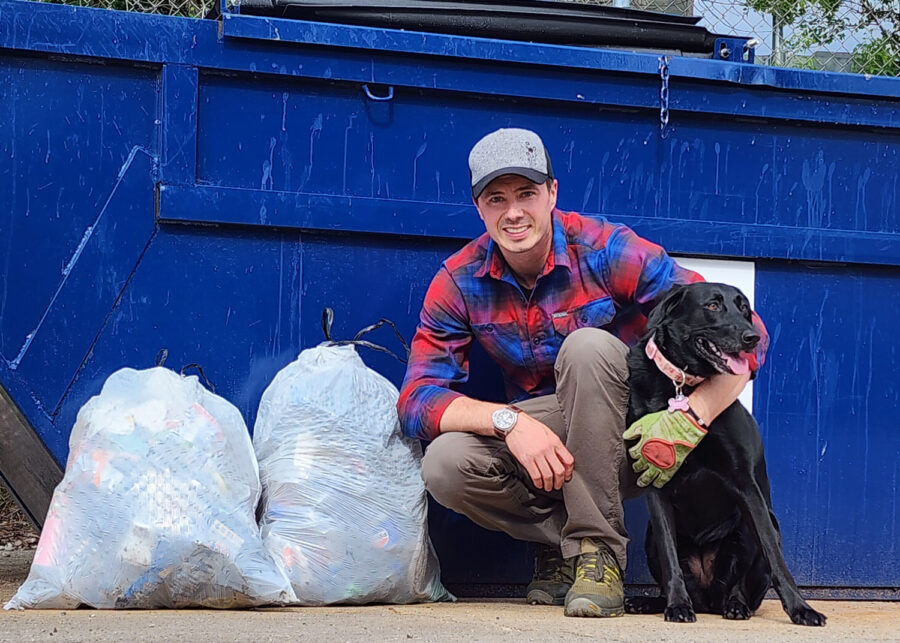
Local action won’t solve everything but it restores a sense of agency. And agency is essential for mental health. We need to feel that our presence still matters somewhere. When my dog Dozy and I spent each day picking up 2 bags of trash out of my Logan Square neighborhood, no matter how bad things were globally, I felt a sense of accomplishment and a stronger connection to my community.
Releasing the pressure to stay optimistic
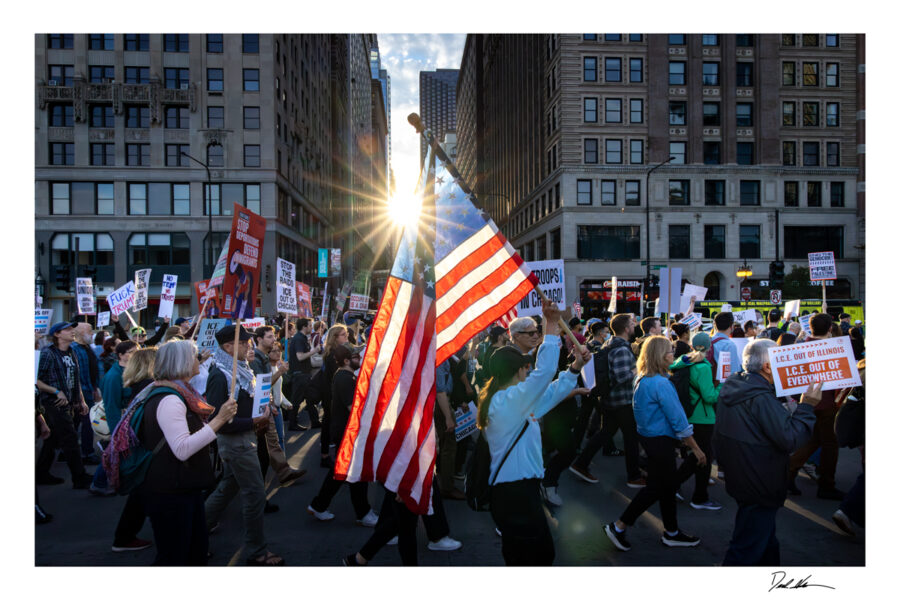
I don’t believe constant optimism is healthy or honest. Some days, the world feels heavy. Some days, hope feels distant. Pretending otherwise creates emotional dissonance that eventually leads to burnout. Nothing gets accomplished if we just keep saying things will “work out”.
Instead of optimism, I aim for commitment.
- I commit to showing up.
- commit to caring.
- commit to continuing the work even when I don’t know how things will turn out.
I commit to posting things on social media that are honest and real. To stand up for those who can’t or are afraid to. This kind of realism is steadier than forced positivity. It allows room for doubt without collapsing into despair.
Reclaiming awe for yourself, not your portfolio, to stay sane
As photographers, it’s easy to turn every experience into content. But awe is not just fuel for creativity, it’s nourishment for the soul. Some of the most healing moments I’ve had in nature happened when I didn’t take a single photograph. When I simply watched. Listened. Let the moment belong to me instead of the audience. Awe quiets the nervous system. It reminds us that while the world is wounded, it is not empty. There is still mystery, intelligence, and beauty operating beyond human systems. Sometimes the most important thing you can do for your mental health is leave the camera behind.
Choosing compassion over cynicism
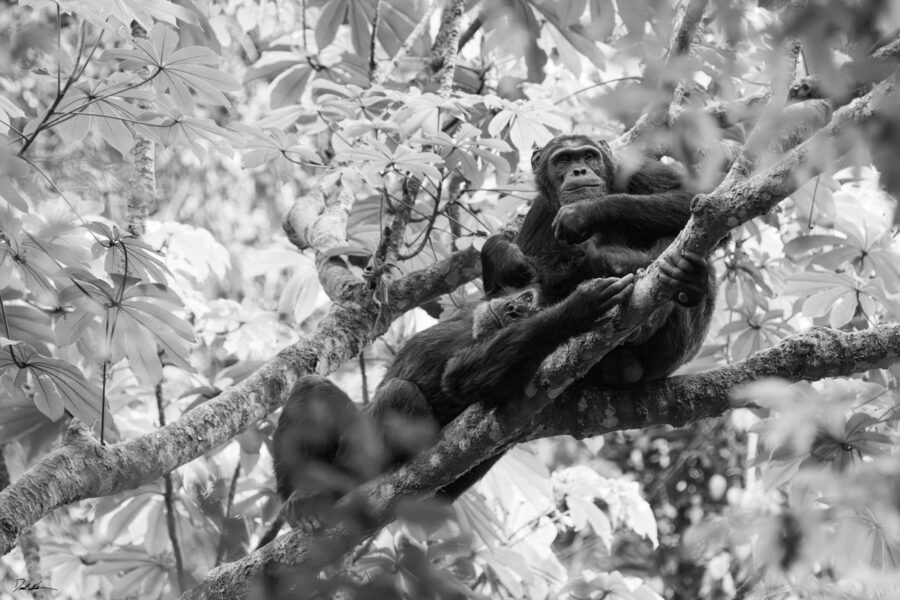
Connections – Limited Edition Fine Art Print of 6 – Derek Nielsen Photography
Cynicism often feels like wisdom during times of collapse. It can masquerade as intelligence or realism, but over time, it erodes connection both to others and to ourselves. I try to stay alert for signs of emotional hardening: sarcasm, numbness, constant bitterness. It is so easy to snap on a negative or ignorant comment on Facebook. These aren’t signs that I see the truth more clearly. There are signs I’m overwhelmed. Kindness, especially toward myself, is not denial. It’s resistance against burnout and despair. I remember driving down Chicago Avenue one day to work from my old house when a man cut me off at merge. It did’nt really bother me. I was having a good morning and was not in any rush. I flashed my lights in a two-pulse double tap to acknowledge him and to simply let him in; no horn honking or hand gestures were involved.
Two blocks later, he got out of the car, clearly still bothered by my signal, and began to tell me I was an asshole for flashing my lights at him and that he was on his way to Children’s Memorial Hospital to tend to his sick kid. Getting out of my car and said “brother, its ok. I was simply letting you in. I am with you. We are not enemies. I will pray for you, kid, tonight.” He began to cry, clearly overwhelmed by everything going on in his life. We hugged in the middle of the street at 7am in the middle of morning traffic, and he went on his way after apologizing. I will never forget that encounter. Compassion always wins.
Redefining what a “good life” looks like now
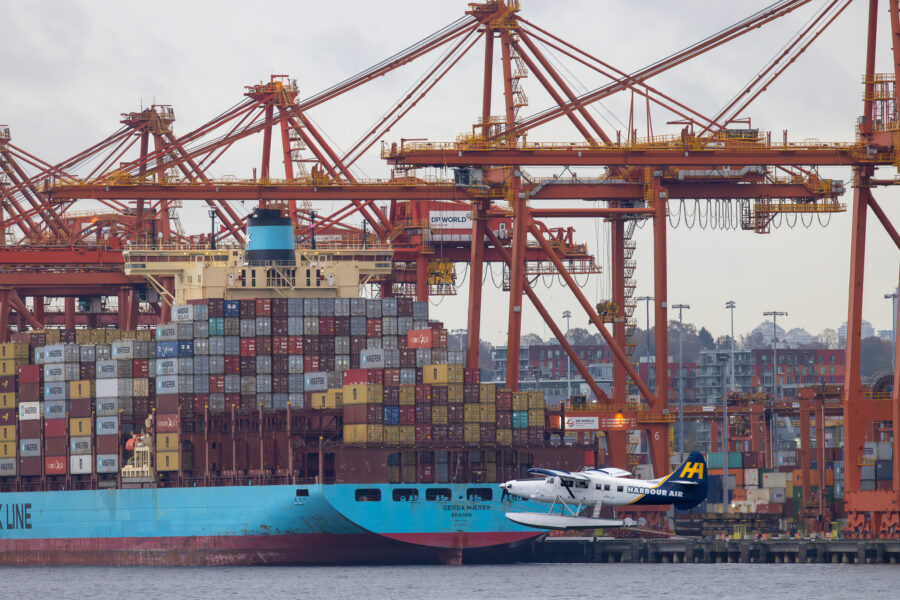
Many of us grew up believing the future would be more stable than the past. That progress was inevitable. That the world would gradually become more just, more secure, more predictable. That belief is being challenged. What is progress? Is it more data centers and less open spaces? More fish in the supermarket but less in the ocean? AI to make our lives easier, but replace creativity and the arts? Cheaper comes at a cost to something…or someone. Acknowledging your choice for it means admitting your impact on local businesses or the planet. When you click the buy now button on Amazon Prime, that has consequences.
Staying sane means redefining success and meaning in a less certain world. For me, a good life now looks like:
-
Depth instead of scale
-
Presence instead of permanence
-
Integrity instead of influence
As a photographer, it means fewer projects but deeper ones. Slower work. More intention. Less chasing, more listening.
Not everything meaningful needs to reach millions. Some things only need to be true.
Loving the world anyway helps me stay sane
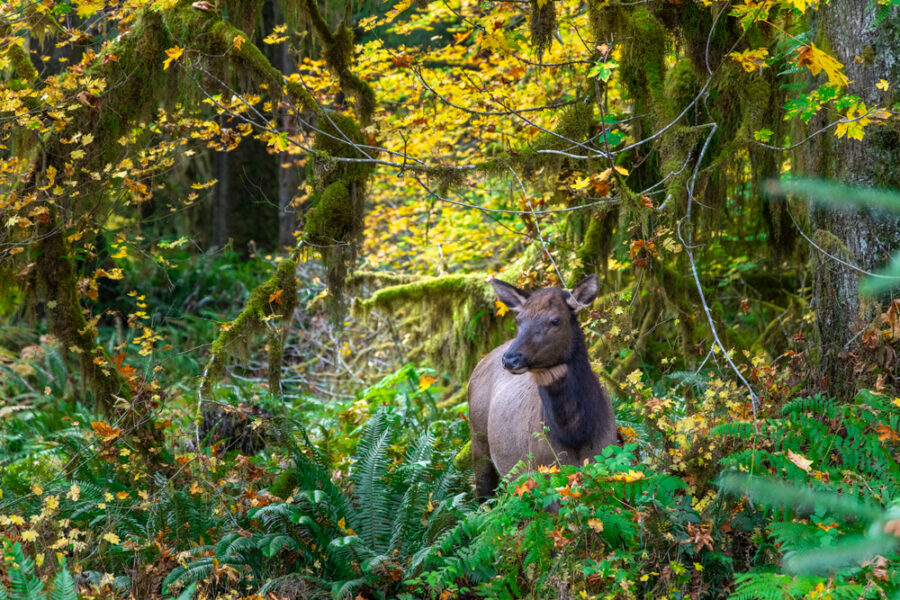
Rainforest Full Of Life – Limited Edition Fine Art Print of 6 – Derek Nielsen Photography
Loving the world in a time of collapse is not naive, it’s brave. To continue caring when outcomes are uncertain is to accept vulnerability. But the alternative numbness, withdrawal, detachment comes at a far greater cost. I became a nature and wildlife photographer because something in me responded to beauty, connection, and belonging. That part of me still exists, even when the future feels uncertain. Staying sane doesn’t mean staying hopeful all the time. It means staying open. Staying present. Continuing to love what is still here. Because while the future may be unclear, the act of paying attention of bearing witness with care still matters.
And for now, that’s enough.
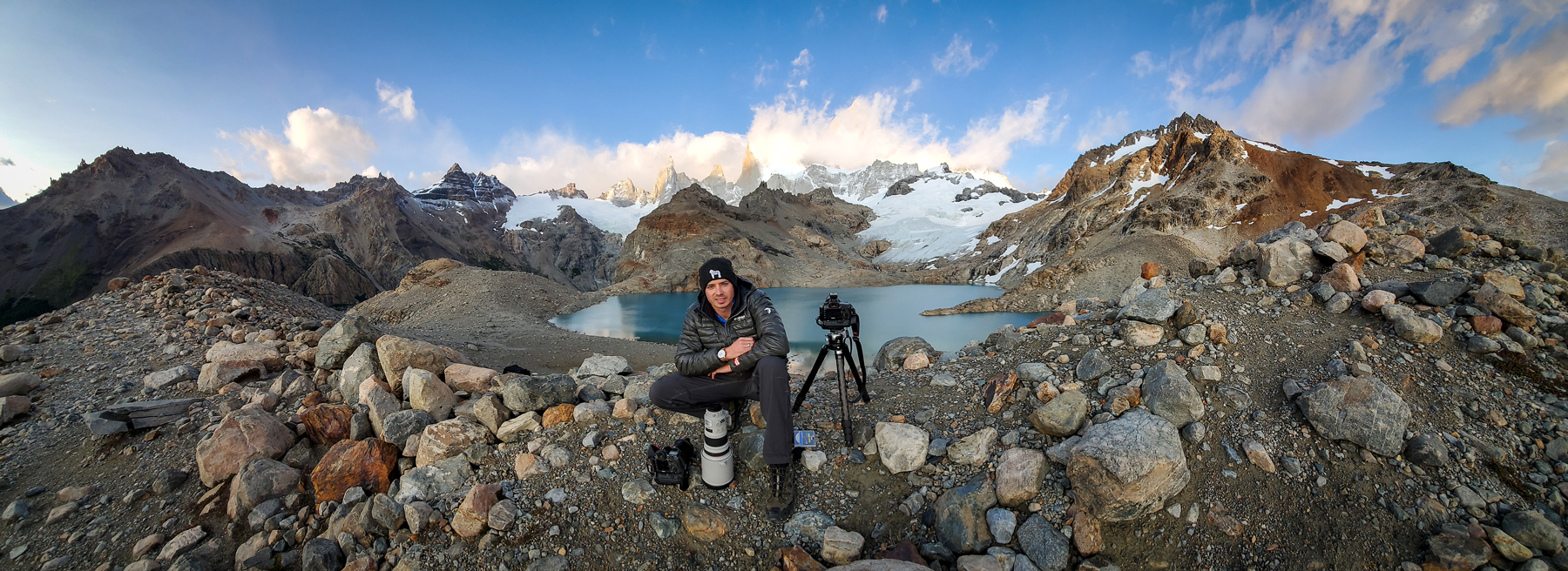
Hello! I'm Derek.
DEREK NIELSEN PHOTOGRAPHY RAISES AWARENESS ABOUT THE GLOBAL NEED FOR CONSERVATION THROUGH PHOTOGRAPHY AND DONATES UP TO 15% OF ALL SALES BACK TO ENVIRONMENTAL ORGANIZATIONS AROUND THE WORLD.