Fine Art Prints – Metal vs Acrylic vs Fine Art Paper: What Serious Collectors Should Know Before Investing in Fine Art Photography
When someone invests in fine art photography, they are not just buying an image.
They are choosing how that image will live in their space for years, sometimes decades. The best can be passed down for generations.
The subject matters.
The story matters.
But the material matters just as much.
One of the most common questions I receive from collectors is:
“Should I choose metal, acrylic, or fine art paper?”
The answer depends on more than preference. It depends on light, architecture, mood, longevity, and the kind of presence you want the piece to hold in a room.
This guide breaks down what serious collectors should know about metal prints vs acrylic prints vs fine art paper prints, so you can make a decision that elevates both the artwork and the space it inhabits.
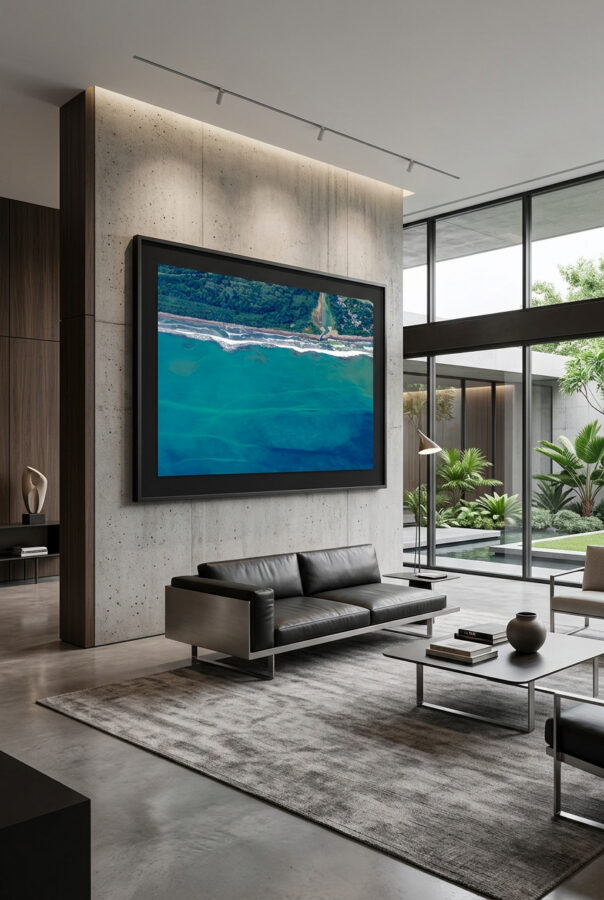
(Costa Rica Blue – Limited Edition Fine Art Print of 6 – Derek Nielsen Photography)
Why Material Choice Is Not Just a Technical Decision
In today’s art market, photography exists in many forms, from inexpensive poster prints to museum-quality limited editions.
The material determines:
- How light interacts with the image
- How color and contrast are perceived
- How durable the piece is over time
- Whether it reads as contemporary, classic, or gallery-grade
- The overall presence it commands in a room
Two identical photographs printed on different materials can feel like entirely different works of art.
If you are a serious collector, or becoming one, understanding these distinctions is essential.
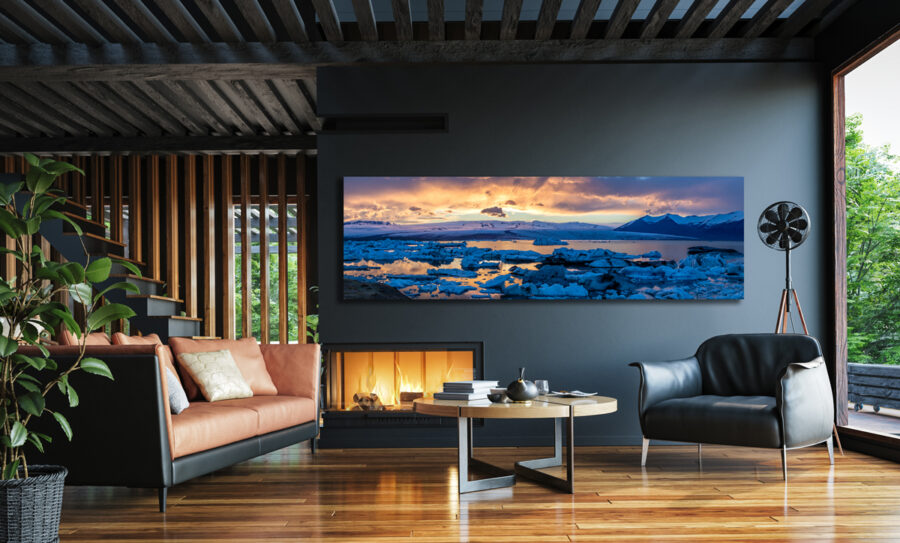
(Fire and Ice – Limited Edition Fine Art Print of 6 – Derek Nielsen Photography)
Metal Prints: Modern, Durable, Bold
Metal prints have grown dramatically in popularity over the past decade, particularly in contemporary homes and corporate environments.
What Is a Metal Print?
A metal print (often referred to as dye-sublimation metal) involves infusing dyes directly into a specially coated aluminum sheet using heat and pressure. The image becomes embedded into the surface rather than sitting on top of it.
This creates a sleek, frameless presentation with remarkable durability.
What Metal Does to an Image
Metal enhances:
- Contrast
- Saturation
- Clarity
- Edge definition
Blacks feel deeper. Highlights appear luminous. Fine details, fur texture, snow, ice crystals, feel crisp and tactile.
For wildlife photography, this can be powerful.
A snow leopard against a dark mountain background on metal feels dramatic and sharp. An elephant emerging from dust appears vivid and commanding.
Where Metal Prints Work Best
Metal prints excel in:
- Modern and minimalist interiors
- Industrial or contemporary architecture
- Offices and corporate environments
- High-traffic spaces
- Areas with fluctuating humidity
Because metal prints are resistant to moisture and warping, they are also ideal for climates where paper-based prints may require more protection.
The Aesthetic of Metal
Metal reads as:
- Clean
- Bold
- Contemporary
- Architectural
There is no frame interrupting the image. The piece feels like an extension of the wall itself.
This works particularly well for:
- Large statement pieces (40×60 and above)
- High-contrast wildlife portraits
- Urban or winter landscapes
- Images with dramatic light
Potential Considerations with Metal
While metal offers striking clarity, it may not suit every aesthetic.
- It can feel too modern for traditional interiors.
- It enhances vibrancy, which may not align with soft, muted imagery.
- It lacks the tactile warmth of paper.
Collectors who prefer subtlety, texture, and traditional framing often lean elsewhere.
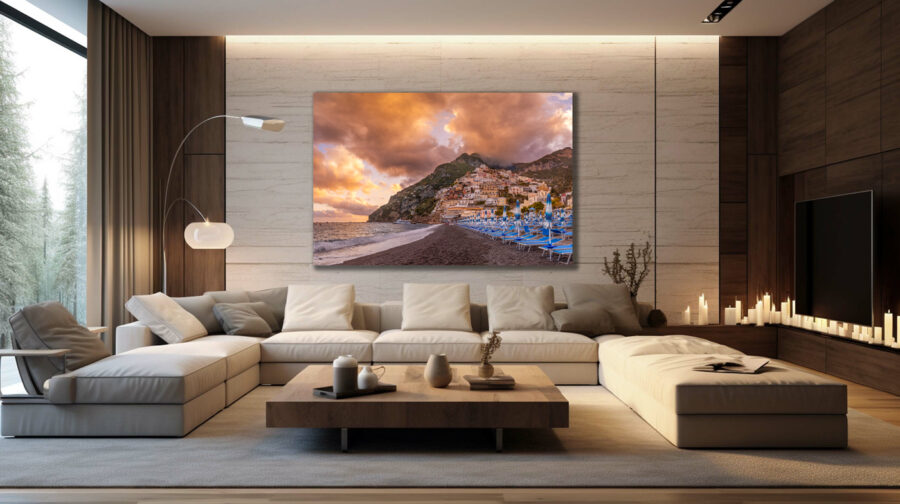
(Positano Breeze – Limited Edition Fine Art Print of 6 – Derek Nielsen Photography)
Acrylic Prints: Depth, Luminosity, Museum Presence
If metal is sleek and architectural, acrylic is immersive. I exclusively print with Nevada Art Printers for my luxury fine art option for my collectors. This medium makes my photography really stand out.
What Is an Acrylic Print?
An acrylic print involves mounting a photographic print behind a sheet of optically clear acrylic (often 1/4” thick or more). The acrylic enhances depth and creates a dimensional, almost glass-like finish.
It is frequently used in gallery settings and high-end installations.
What Acrylic Does to an Image
Acrylic amplifies:
- Depth
- Dimensionality
- Richness in shadows
- Luminosity in highlights
Because of the way light passes through the acrylic and reflects back through the image, blacks feel deeper, and color appears more vibrant.
This is especially stunning for:
- Night photography
- High-contrast wildlife
- Snow and ice scenes
- Images with strong directional light
For example, emperor penguins in Antarctic light gain an almost cinematic quality under acrylic.
Where Acrylic Works Best
Acrylic shines in:
- Contemporary luxury homes
- Modern condos with natural light
- Corporate lobbies
- Statement focal walls
- Spaces designed to impress
Because of its glass-like finish, acrylic interacts dynamically with light. It feels elevated and museum-quality.
The Aesthetic of Acrylic
Acrylic reads as:
- Sophisticated
- Polished
- Immersive
- High-end
It has presence. It commands attention.
Large-format acrylic wildlife photography often becomes the anchor of a room.
Potential Considerations with Acrylic
- It can reflect light, especially in rooms with many windows.
- It is typically more expensive than metal or paper.
- It may feel too bold for soft, intimate spaces like bedrooms.
Serious collectors often reserve acrylic for statement installations.
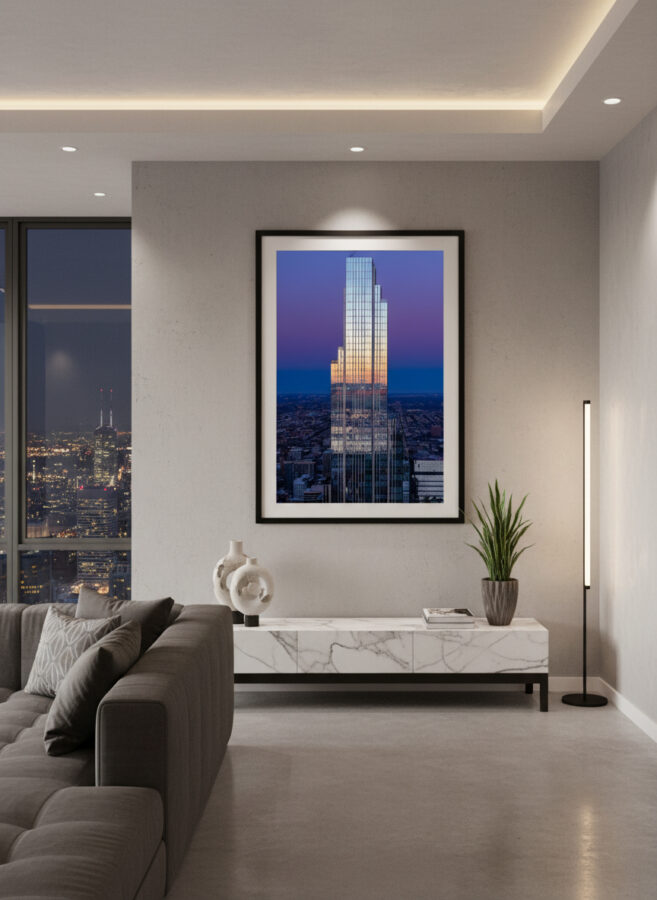
(Reflections In The Sky – Limited Edition Fine Art Print of 6 – Derek Nielsen Photography)
Fine Art Paper: Timeless, Textured, Classic
While metal and acrylic dominate contemporary trends, fine art paper remains the gold standard in traditional photography circles. In Chicago, I work with PrintLab for all my fine art paper prints. Their attention to detail and knowledge is second to none.
What Is Fine Art Paper?
Fine art photography paper is archival, acid-free paper designed for longevity and museum presentation. Popular options include cotton rag papers and baryta-based papers.
These prints are typically framed under museum glass for protection.
What Fine Art Paper Does to an Image
Fine art paper enhances:
- Subtle tonal transitions
- Texture
- Depth without gloss
- Nuanced shadow detail
Unlike metal or acrylic, fine art paper does not amplify vibrancy. It allows the image to breathe quietly.
Black-and-white wildlife portraits, for example, often feel more soulful and contemplative on cotton rag paper.
Where Fine Art Paper Works Best
Fine art paper is ideal for:
- Traditional homes
- Transitional interiors
- Bedrooms
- Intimate spaces
- Collector-focused installations
When paired with a high-quality frame and mat, it offers a timeless aesthetic that never feels trendy.
The Aesthetic of Fine Art Paper
Fine art paper reads as:
- Elegant
- Refined
- Classic
- Museum-worthy
It carries the heritage of photography as an art form.
Collectors who value subtlety and craftsmanship often gravitate here.
Potential Considerations with Paper
- Requires framing
- More sensitive to humidity
- Not as moisture-resistant as metal
- Lower perceived vibrancy compared to acrylic
However, when properly framed under archival glass, fine art paper can last generations.
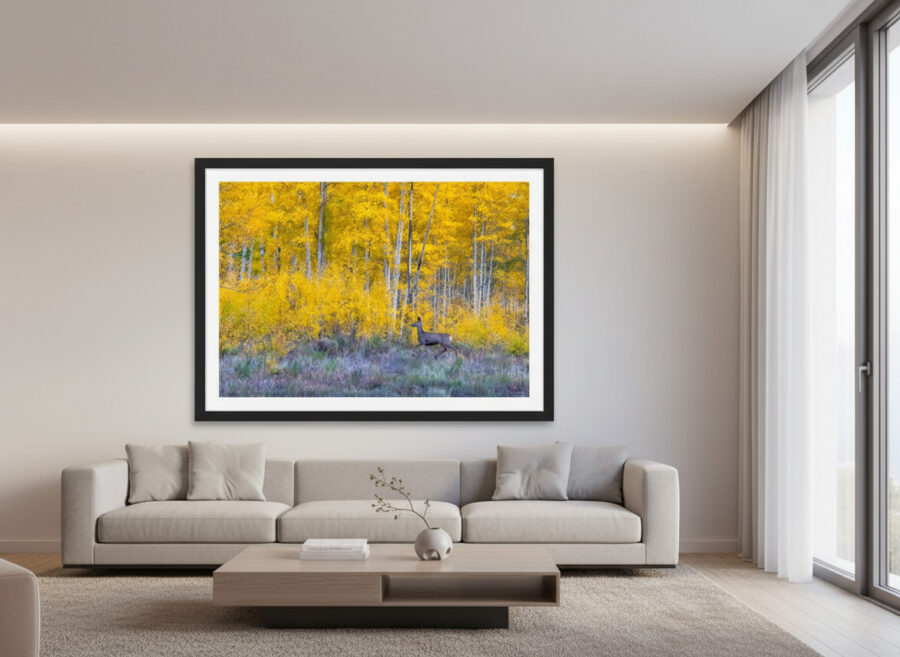
(Prancing Aspens – Limited Edition Fine Art Print of 6 – Derek Nielsen Photography)
Durability & Longevity Comparison
Serious collectors care about longevity.
Here’s how the materials compare:
Metal
- Extremely durable
- Scratch-resistant
- Moisture-resistant
- Fade-resistant when displayed properly
Acrylic
- Durable
- Scratch-resistant (surface dependent)
- May require careful cleaning
- Long archival lifespan
Fine Art Paper
- Archival when properly framed
- Sensitive to moisture without protection
- Dependent on glass and environment
All three can last decades when professionally produced.

(South Haven In My Heart – Limited Edition Fine Art Print of 6 – Derek Nielsen Photography)
Lighting Considerations: Often Overlooked
Light transforms art.
Before choosing material, consider:
- Does the room receive direct sunlight?
- Are there overhead spotlights?
- Is the room softly lit?
Metal and acrylic respond dynamically to light. Paper diffuses it.
Rooms with controlled lighting often benefit from acrylic. Rooms with soft ambient light may elevate paper beautifully.

(Watchman’s Gone – Limited Edition Fine Art Print of 6 – Derek Nielsen Photography)
Cost Differences: What Are You Paying For?
Generally:
- Fine Art Paper (framed) – Moderate to high depending on framing
- Metal – Moderate to high
- Acrylic – Typically highest
However, cost reflects:
- Material expense
- Production complexity
- Installation considerations
- Perceived luxury
Serious collectors understand that presentation contributes to value.

(Twisted Aspens – Limited Edition Fine Art Print of 6 – Derek Nielsen Photography)
Which Medium Adds the Most Value?
Value is influenced by:
- Limited edition status
- Artist reputation
- Print quality
- Archival integrity
- Presentation
While acrylic often carries the highest perceived luxury, value ultimately stems from edition scarcity and craftsmanship.
A limited edition print on fine art paper can hold equal collector weight to acrylic, if produced to museum standards.
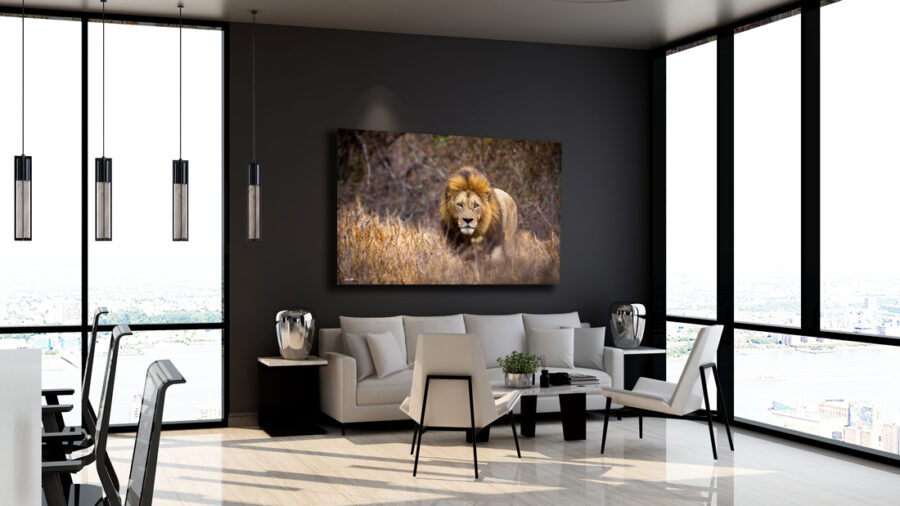
(Ngoro Stare – Limited Edition Fine Art Print of 6 – Derek Nielsen Photography)
Matching Medium to Wildlife Subject
Certain wildlife subjects pair naturally with certain materials.
Dramatic Predators
- Acrylic or metal for bold impact
Snow & Ice Landscapes
- Acrylic for depth
- Metal for crisp brightness
Black & White Portraits
- Fine art paper for emotional nuance
Expansive Savannas
- Metal for saturation
- Paper for subtle warmth
Choosing intentionally enhances the story.
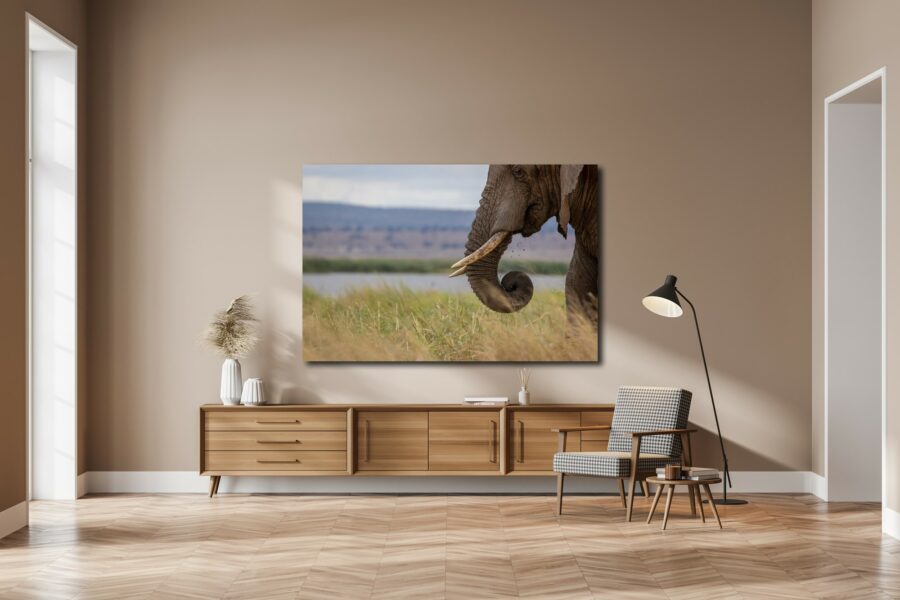
(The Grazer – Limited Edition Fine Art Print of 6 – Derek Nielsen Photography)
The Role of Sustainability
As collectors become more environmentally conscious, material sourcing matters.
- Aluminum is recyclable.
- Archival cotton papers are often sustainably sourced.
- Acrylic manufacturing varies by supplier.
Working with print labs that prioritize environmental responsibility ensures your investment aligns with your values.

(Canon Beach – Limited Edition Fine Art Print of 6 – Derek Nielsen Photography)
How Serious Collectors Decide
Serious collectors typically ask:
- What feeling do I want this piece to hold?
- What is the architectural style of my home?
- Is this a statement or supporting piece?
- How does light interact with this wall?
- Do I want bold or subtle?
They rarely choose based solely on price.
They choose based on longevity and presence.
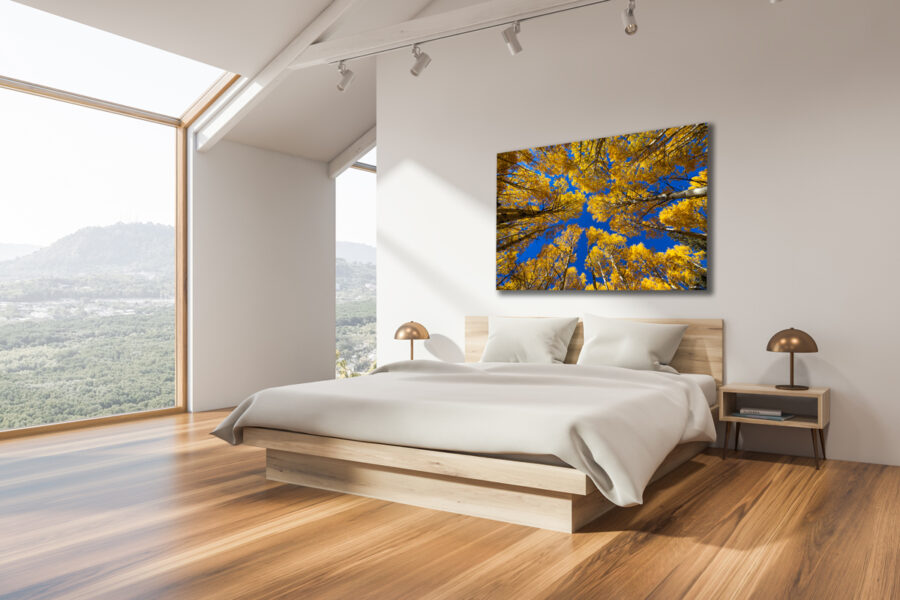
(Telluride Aspens – Limited Edition Fine Art Print of 6 – Derek Nielsen Photography)
Frequently Asked Questions
Is metal or acrylic better for large prints?
Both perform beautifully at large scale. Acrylic often feels more luxurious; metal feels sleek and architectural.
Does fine art paper look less premium?
Not at all. In fact, in traditional photography circles, archival paper is the historic standard.
Which material resists fading best?
All archival materials resist fading when kept out of direct UV exposure.
Is acrylic worth the extra cost?
For statement installations in modern spaces, many collectors believe it is.

(Plains of Fire – Limited Edition Fine Art Print of 6 – Derek Nielsen Photography)
Final Thoughts: The Medium Should Serve the Story
The right material elevates the original image.
Acrylic can make Antarctic light glow.
Metal can sharpen the edge of a leopard’s stare.
Fine art paper can soften the stillness of a winter bison.
There is no universal “best.”
There is only what aligns with:
- The image
- The space
- The collector
- The story
If you are considering investing in wildlife fine art photography and are unsure which material best suits your home, I offer collector consultations to walk through scale, lighting, and presentation.
Because serious collectors do not just choose images.
They choose how those images will live.

Hello! I'm Derek.
DEREK NIELSEN PHOTOGRAPHY RAISES AWARENESS ABOUT THE GLOBAL NEED FOR CONSERVATION THROUGH PHOTOGRAPHY AND DONATES UP TO 15% OF ALL SALES BACK TO ENVIRONMENTAL ORGANIZATIONS AROUND THE WORLD.