Is This Photograph Real? Why Authenticity Matters More Than Ever in the Age of AI
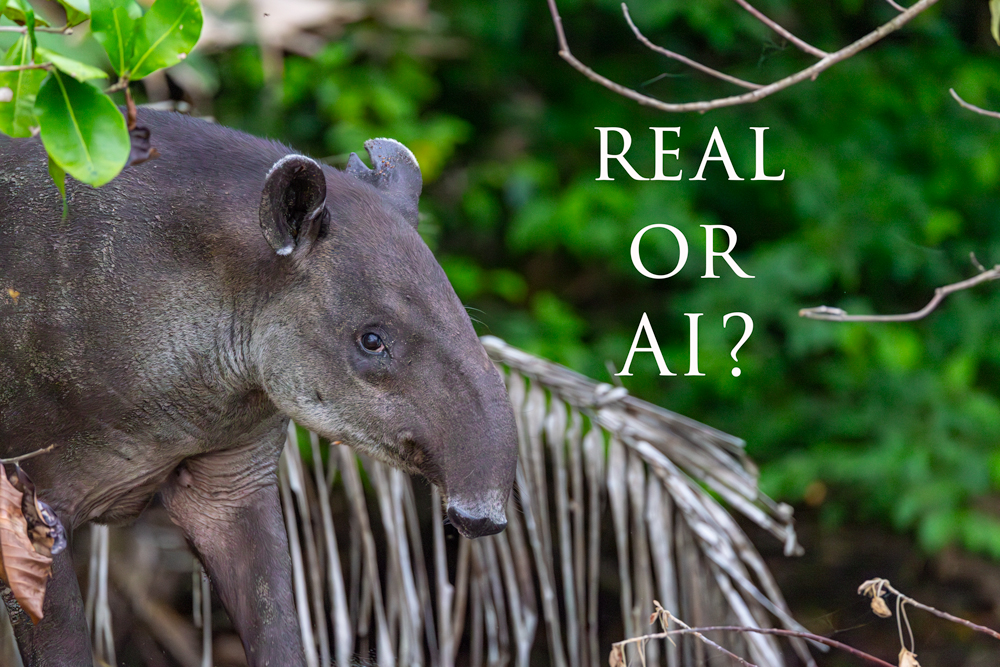
AI-generated images are making it increasingly difficult to distinguish real photography from artificially created imagery. For wildlife photography in particular, this raises an important question: if an image looks completely real but the animal, landscape or moment never existed, can we still call it a photograph?
There was a time when seeing an extraordinary wildlife photograph inspired a simple reaction: How did the photographer get that shot?
Today, many viewers ask another question first: Is this photograph real?
Artificial intelligence can create convincing images of animals that were never photographed, landscapes that don’t exist, and wildlife encounters that never happened. A few words entered into an AI image generator can produce a snow leopard on a Himalayan peak, an elephant beneath the northern lights or a polar bear perfectly positioned against a dramatic sunset.
These images can be beautiful and artistically interesting. But if they were generated rather than captured, they are not wildlife photographs in the traditional meaning of photography. That distinction matters. Wildlife photography isn’t only about creating a beautiful final image. It is about witnessing and documenting an encounter with the natural world. As AI becomes better at manufacturing convincing versions of those encounters, authenticity may become one of the most important qualities a photograph can possess.
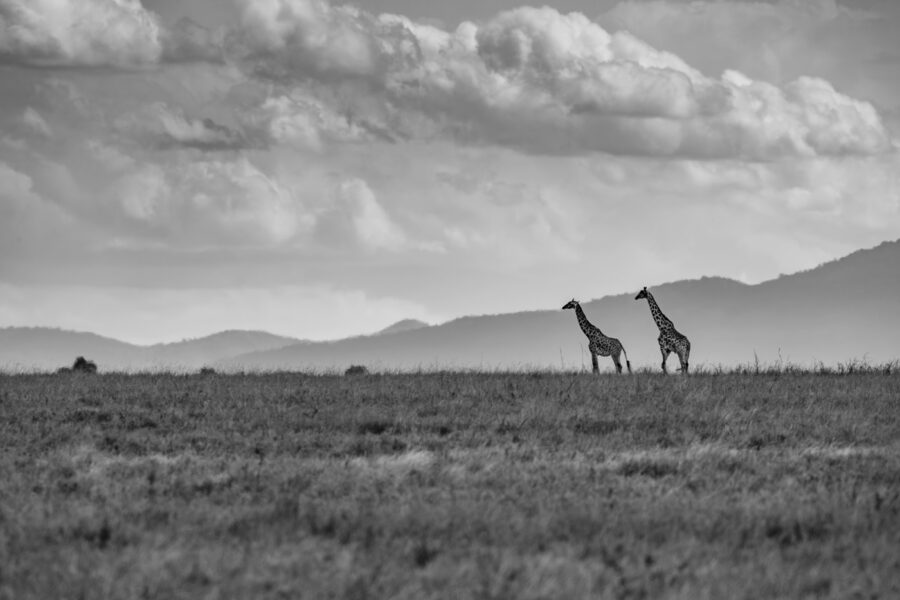
Above It All – Limited Edition Fine Art Print of 6 – Derek Nielsen Photography
What Is Authentic Photography?
Authentic photography begins with a real moment captured by a camera, even when the photographer later makes artistic adjustments to the image. The animal, landscape, light and underlying event represented in the photograph actually existed in front of the photographer.
That doesn’t mean photography has ever been completely objective. Every photographer makes choices. We choose where to stand, which lens to use, what shutter speed to select and what belongs inside the frame. We decide whether the finished photograph should be color or black and white. Those decisions influence how viewers experience the scene.
Photographers have also edited their work since long before digital photography existed. Darkroom photographers adjusted exposure, contrast and tonality through techniques such as dodging and burning. Modern photographers accomplish many of the same goals using software. I adjust my photographs as part of my own artistic process. I may work with exposure, contrast, color, cropping and tonality to translate what I experienced in the field into a finished fine-art photograph.
The most important question isn’t simply whether a photograph has been edited. It is whether the moment represented by the photograph actually happened.
Photographer Peter Lik famously got busted claiming to have photographed a real scene of a moonrise, later to be called out by scientists for its impossibility based on the phase of the moon during when he claimed to have taken the photo.
For me, eithcs matter. Honesty matters.
What Is the Difference Between AI Art and Photography?
The primary difference between AI-generated art and photography is that traditional photography begins with light captured from a real subject, while generative AI can create an image of a scene that never existed.
That doesn’t make AI-generated artwork inherently bad. AI is simply another way of creating visual imagery. Artists can use it to explore ideas, imagination, and storytelling, just as generations of artists have used painting, illustration, collage, and computer-generated graphics.
The important issue is transparency. If an AI-generated image is presented as digital or AI art, viewers understand what they are seeing. The ethical problem occurs when an artificial image is presented in a way that causes viewers to believe it documents a real wildlife encounter. The distinction between creating an image from imagination and creating a photograph from an encounter with reality becomes especially important in wildlife and conservation photography.
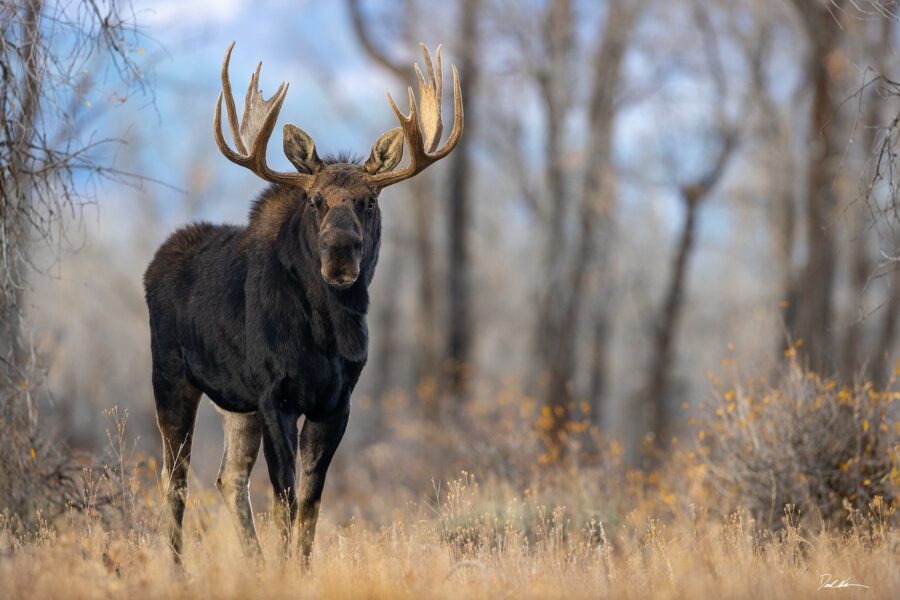
Heir To The Throne – Limited Edition Fine Art Print of 6 – Derek Nielsen Photography
Why Does Authenticity Matter in Wildlife Photography?
Authenticity matters in wildlife photography because part of a wildlife photograph’s meaning comes from knowing that the photographer witnessed a real animal, in a real place, during a real moment. Imagine seeing an extraordinary photograph of a snow leopard standing on a remote Himalayan ridge. The photograph itself might be beautiful.
Now imagine learning what happened behind the image. Perhaps the photographer spent two weeks hiking through thin mountain air. Temperatures dropped far below freezing. Days passed without seeing a snow leopard. Then, suddenly, one appeared. For thirty seconds, photographer and animal shared the same landscape.
Knowing that story changes how we experience the photograph. You aren’t simply looking at pixels arranged into the shape of a snow leopard. You are looking at evidence of an extraordinary moment when two living creatures occupied the same place at the same time. The difficulty, uncertainty, and patience is all part of what makes it real.
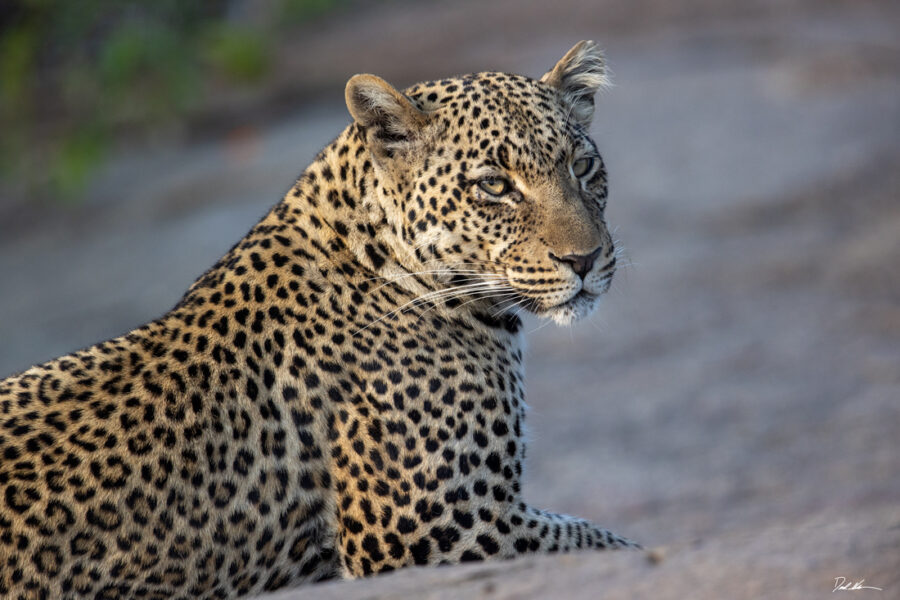
Queen Mother – Limited Edition Fine Art Print of 6 – Derek Nielsen Photography
Why Is Wildlife Photography Different From AI-Generated Wildlife Art?
Wildlife photography requires the photographer to respond to nature rather than control it. AI-generated wildlife imagery allows the creator to control nearly every aspect of the scene. Wild animals don’t take direction. Landscapes don’t rearrange themselves to improve our compositions. Weather doesn’t care about our plans. Light changes. Animals disappear. Opportunities sometimes vanish before we are ready.
A wildlife photographer can travel thousands of miles and return without the photograph they imagined. That uncertainty isn’t a weakness of wildlife photography. It is part of what makes it meaningful.
Generative AI reverses that relationship. The creator can request the animal, pose, background, weather, lighting, and composition. The image can be extraordinary. But the encounter never occurred.
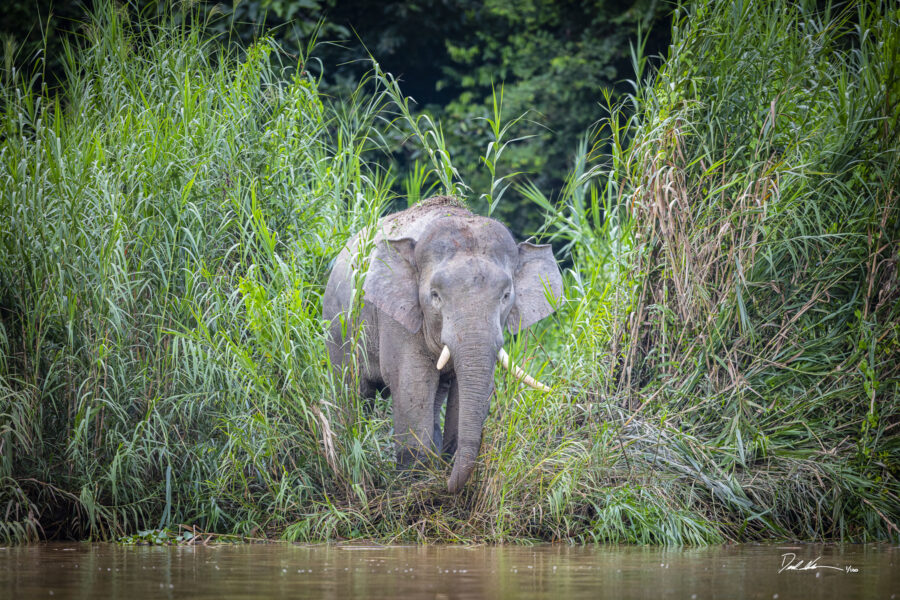
Giant Crossing – Limited Edition Fine Art Print of 6 – Derek Nielsen Photography
Why Does the Story Behind a Wildlife Photograph Matter?
The story behind a wildlife photograph connects the final image to an actual experience, animal, and place. That story can transform a beautiful picture into something capable of communicating emotion, behavior, conservation and our relationship with the natural world.
I’ve been fortunate enough to photograph wildlife on all seven continents and in environments ranging from tropical rainforests to polar regions. What stays with me most isn’t necessarily the fraction of a second when I press the shutter. It’s everything surrounding that moment. The journey, waiting, uncertainty, sounds of the landscape, behavior of the animal, and the people who helped me understand the place.
Sometimes it is the realization that what I am witnessing is far more meaningful than the photograph I originally hoped to make. Those experiences became an important inspiration behind my book, The Wild Within.
After years of photographing animals, I began thinking less about the photographs I had collected and more about what those encounters had taught me. Endurance. Adaptability. Leadership. Family. Presence. Connection.
Those lessons came from observing real animals living real lives. AI can generate a visually convincing elephant. It cannot recreate my experience of watching an elephant family interact. AI can generate an orca breaking the surface of an ocean. It cannot recreate the experience of hearing a wild killer whale breathe beside me, or realizing that the animal belongs to a population struggling to survive. A photograph can carry part of that real experience forward.
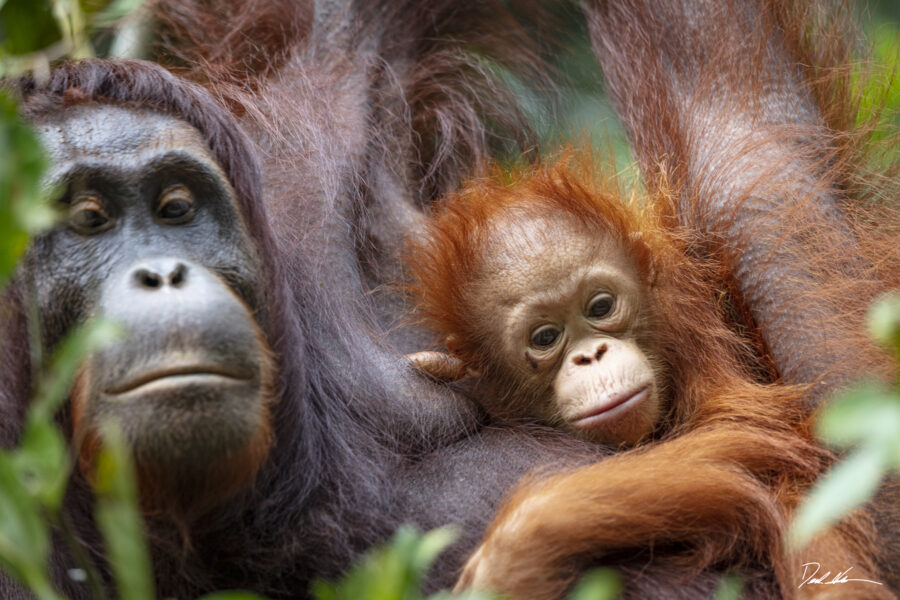
Embrace – Limited Edition Fine Art Print of 6 – Derek Nielsen Photography
What Is Conservation Photography?
Conservation photography uses authentic photographic storytelling to communicate environmental issues, wildlife behavior, threatened ecosystems and humanity’s relationship with nature. Its goal can extend beyond creating beautiful images to helping people understand what is happening to the natural world. Many people will never travel deep into the forests of Borneo and witness deforestation firsthand.
Most will never encounter a Southern Resident killer whale in the Pacific Northwest. They may never stand on disappearing sea ice, visit a damaged coral reef, or walk through habitat fragmented by human development. Photography can bring those realities closer.
A photograph can turn an abstract environmental problem into something tangible. Habitat loss becomes a forest. Biodiversity loss becomes an animal. Climate change becomes a landscape. Statistics become stories.
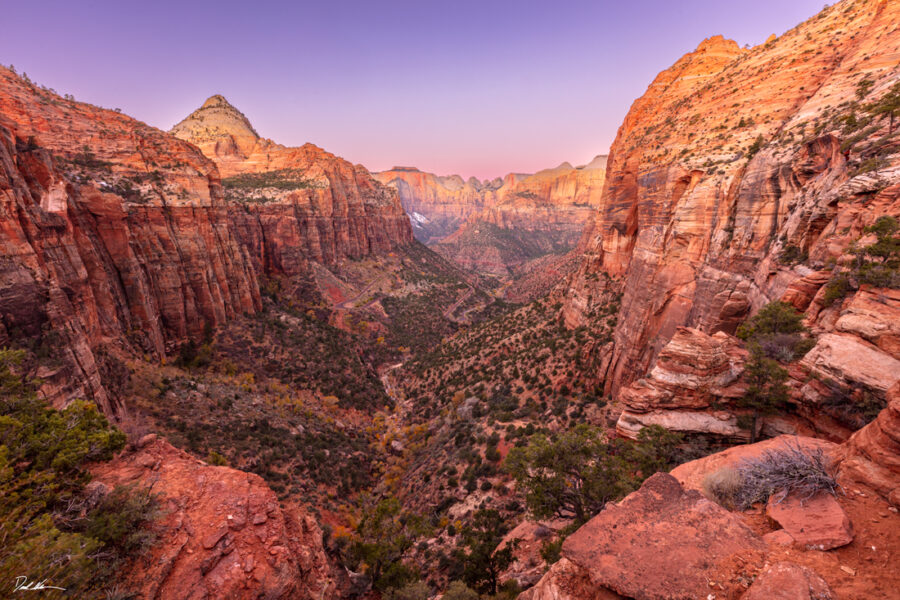
Canyon Fire – Limited Edition Fine Art Print of 6 – Derek Nielsen Photography
How Does AI Affect Conservation Photography?
AI-generated wildlife images can complicate conservation communication because viewers may no longer know whether an image documents an actual animal, behavior, ecosystem or environmental condition. Conservation photography depends heavily on trust.
When a photographer documents deforestation, habitat destruction, endangered wildlife or changing ecosystems, the photograph carries an implicit message: This exists and it needs our help or at least our attention.
If audiences begin assuming that extraordinary wildlife imagery might have been generated or substantially altered by AI, photography risks losing some of its power as visual evidence. That doesn’t mean AI cannot be used to communicate environmental ideas. AI-generated illustrations could potentially help people imagine future climate scenarios or explain complex scientific concepts. But those images should be clearly identified as illustrations or generated imagery.
Documentary and conservation photography serve a different purpose. They allow us to witness what is actually there and what is at risk of being lost.
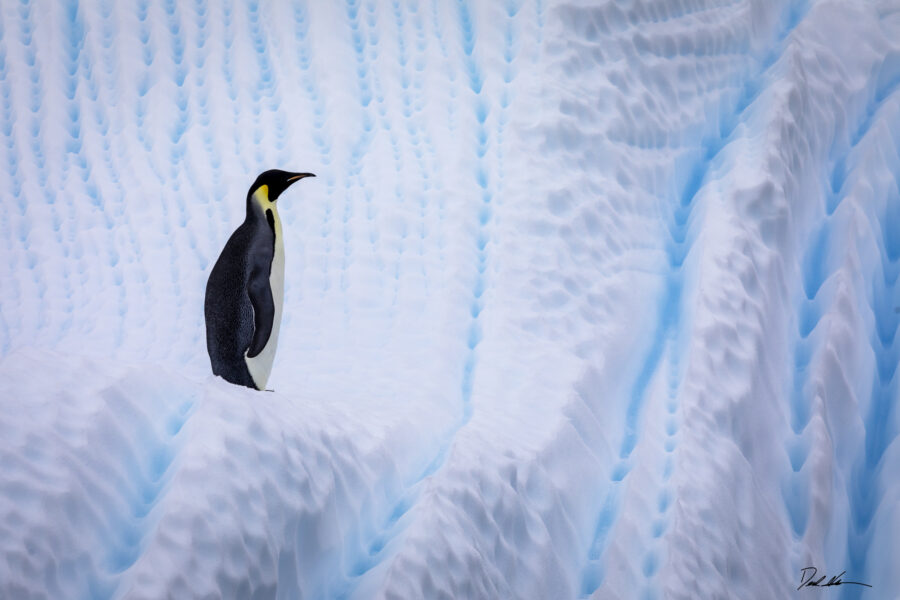
Emperor On Ice – Limited Edition Fine Art Print of 6 – Derek Nielsen Photography
Are AI-Generated Images Allowed in Wildlife Photography Competitions?
Major photography competitions increasingly distinguish between authentic photography and AI-generated imagery. World Press Photo and the International Photography Awards prohibit synthetic or artificially generated images in its competition and restricts editing that introduces or removes information from photographs.
Wildlife Photographer of the Year, organized by London’s Natural History Museum, also prohibits AI-generated images and post-processing that adds new image content. Photographers may be required to provide original files and information about how an image was created.
These standards reflect a much broader issue facing photography. For much of photographic history, seeing a photograph carried an implicit assumption: Something was there. In the age of generative AI, viewers can no longer automatically make that assumption.
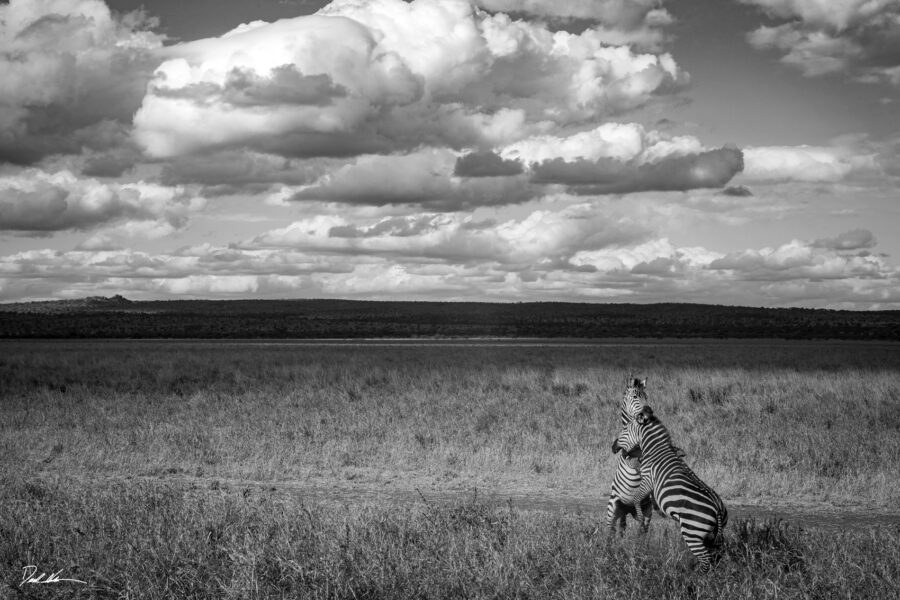
Line Conflict – Limited Edition Fine Art Print of 6 – Derek Nielsen Photography
What Is the Difference Between Photo Editing and AI Manipulation?
Traditional photo editing adjusts characteristics of information captured by the camera, while generative AI can introduce visual information that was never photographed. The distinction isn’t always perfectly simple, especially as AI tools become integrated into photography software.
But I use a straightforward principle for my own wildlife photography: The wildlife and places represented in my photographs existed in front of my camera. I may adjust exposure, refine contrast, work with color and tonality, convert a photograph to black and white, or crop an image to strengthen its composition. Those choices help me interpret what I experienced and create the final piece of art I envisioned. But there is an important difference between interpreting a photograph and inventing what happened. If an elephant wasn’t standing beneath a mountain, I don’t believe AI should put one there and allow the result to be presented as wildlife photography. If there were two wolves, generating two additional wolves fundamentally changes what happened. Exact same if the sky was empty, adding an eagle creates an event that never occurred.
The resulting image may still be art. But it represents something different from authentic wildlife photography. Viewers deserve to know the difference.
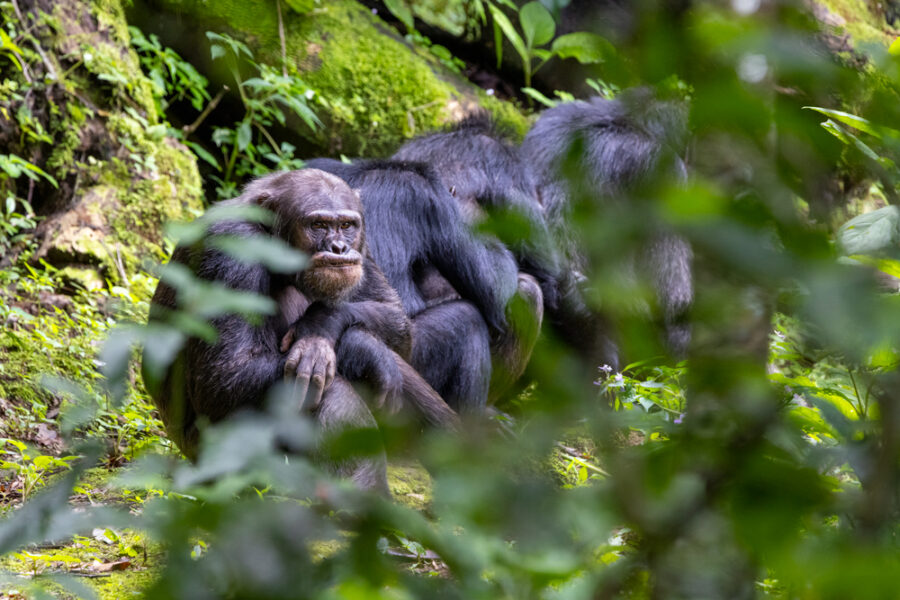
Invitation Only – Limited Edition Fine Art Print of 6 – Derek Nielsen Photography
Is AI Bad for Photography?
AI is not inherently bad for photography. The impact of AI depends largely on how photographers use it and whether its use changes the reality an image claims to represent. Artificial intelligence can help photographers organize large image libraries, improve search and metadata, automate repetitive tasks and assist with certain processing workflows. Those uses don’t necessarily undermine photographic authenticity.
The more important question is whether AI assists the photographer or manufactures the photographic event. Technology can help me work with a photograph. I don’t want it to manufacture the wildlife encounter that photograph claims to represent.
AI also steals from photographers who never gave the company the rights to use their photography in the first place to train their models. I have instructed fellow photographers to lean harder into storytelling, public speaking, writing books, and selling origional prints to help them diversify their income streams. Personally, I think AI has made me a better photographer because it challenges me to create really beautiful origional art the same way entering into a top photography competition does. I know what is going to be seen is really strong. How can I up my game?
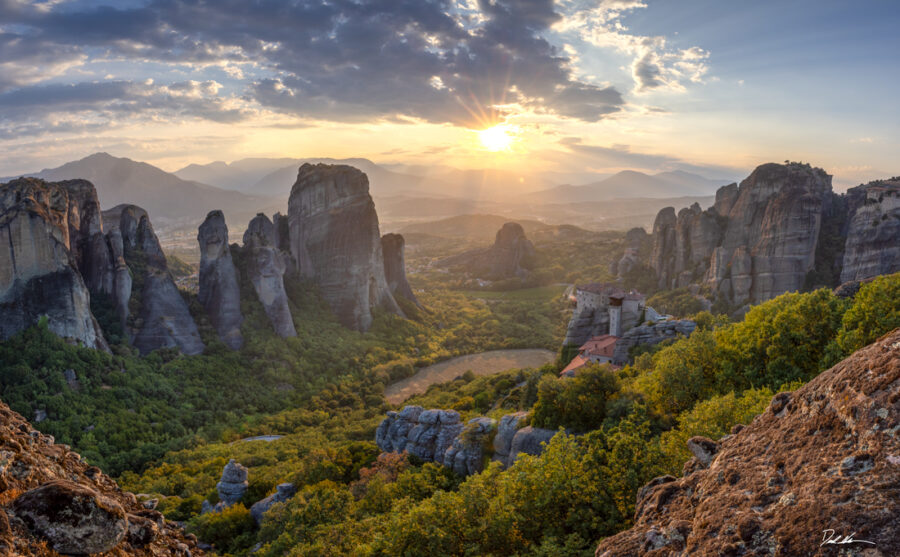
Mighty Meteora – Limited Edition Fine Art Print of 6 – Derek Nielsen Photography
Will AI Change Fine-Art Photography?
AI may actually increase the value people place on authentic fine-art photography because real photographs are connected to experiences, places and moments that cannot simply be regenerated. There is real skill and talent involved. For decades, photographers have pursued technical perfection. Sharper lenses. Higher resolution. Cleaner files. Better autofocus. Greater dynamic range.
Now computers can manufacture something approaching visual perfection almost instantly. A mountain can appear exactly where composition theory says it should. An animal can turn its head at precisely the right angle. The sunset can become impossibly dramatic. Every distracting branch can disappear. Everything can be perfect.
Perhaps that will make perfection less interesting. The future of photography may not be defined by who can produce the most flawless image. It may increasingly be defined by who can create the most meaningful one. Does the photograph tell a story or create an emotion? That is where the secret sause has always been.
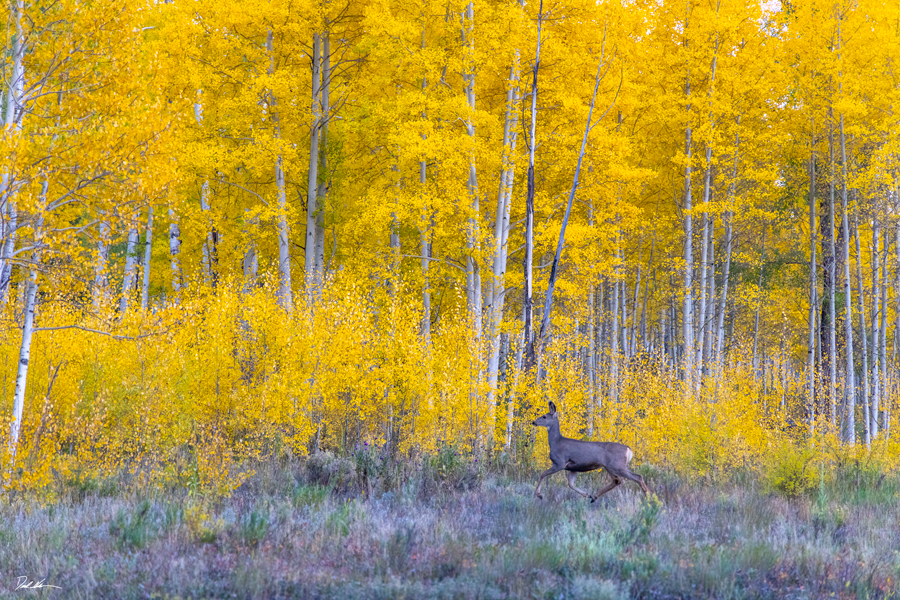
Prancing Aspens – Limited Edition Fine Art Print of 6 – Derek Nielsen Photography
Why Can Imperfect Wildlife Photographs Be Powerful?
An imperfect wildlife photograph can feel more authentic because nature itself is unpredictable and uncontrolled. Sometimes an animal is partially hidden, fog obscures the landscape, the light isn’t dramatic or the encounter lasts only seconds.
But those imperfections remind us that nature isn’t a studio. We are visitors. We don’t control the experience. And when something extraordinary happens, we are fortunate simply to witness it. Seek strong compositions and leave perfection to the eyes and judgement of the viewer.
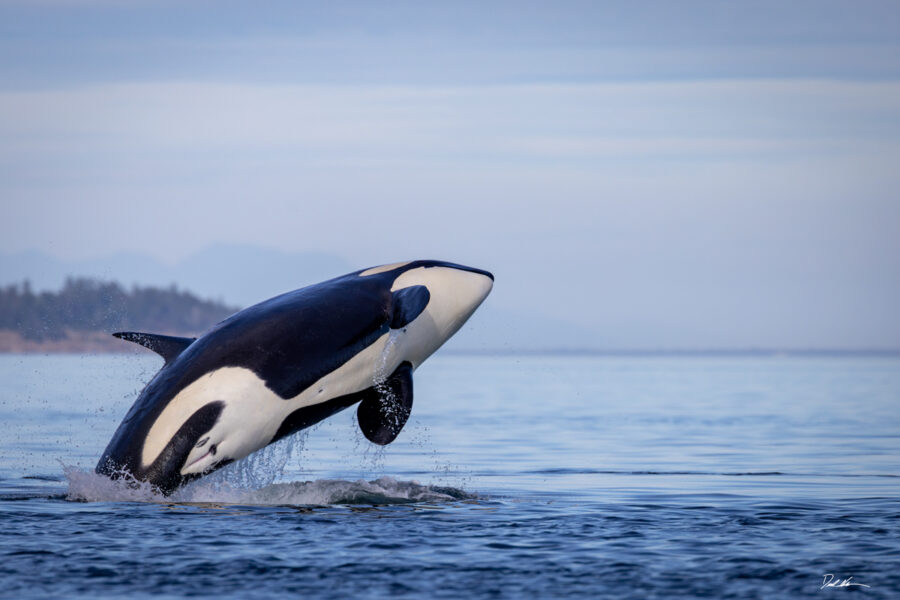
Happiness – Limited Edition Fine Art Print of 6 – Derek Nielsen Photography
Will Authentic Photography Become More Valuable Because of AI?
As synthetic images become easier to generate, photographs connected to documented real-world experiences may become more meaningful and potentially more desirable to collectors who value authenticity and provenance.
Imagine owning a fine-art wildlife photograph and knowing the photographer traveled across the world to create it. The animal actually stood there and the weather actually happened. The light actually fell across that landscape. There was a specific moment when the photograph became possible, and that moment will never happen in precisely the same way again. Maybe they make it a 1 of 1. Something just as rare as a painting from one of the greatest painters of our time.
The resulting print isn’t simply decoration. It is connected to a place. An animal. A story. A real moment. In a world increasingly filled with synthetic imagery, reality itself may become a form of rarity.
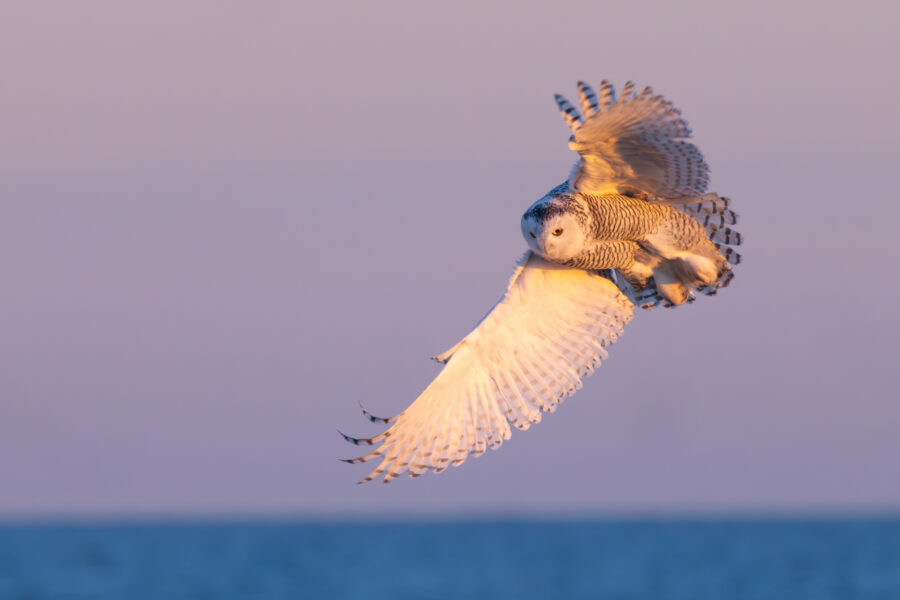
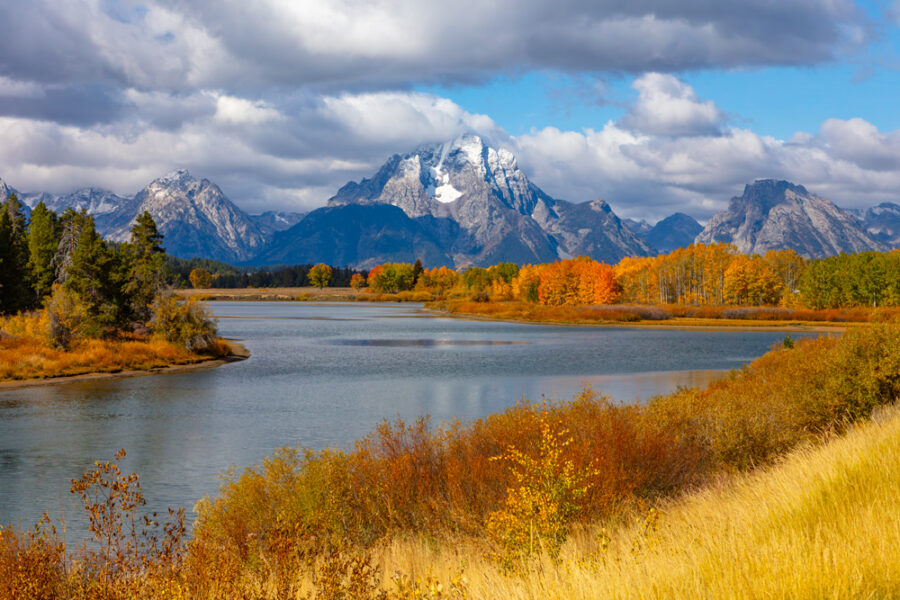
Winter Worrior – Limited Edition Fine Art Print of 6 – Derek Nielsen Photography
Why Is Trust Important in Photography?
Trust matters because photography has traditionally occupied a unique space between art and evidence. Photographers creatively interpret the world, but viewers generally expect the fundamental subjects and events represented in a photograph to have existed. A painting can depict an imagined landscape without deceiving us. An illustration can show an animal behaving in a way the artist never witnessed. AI-generated art can similarly create entirely imagined worlds.
Photography carries a different expectation. Beneath the photographer’s creative interpretation is an assumption that light entered a lens and recorded something that existed. That relationship between photography and reality is worth protecting. Not because other forms of image-making are less valuable. But because photography offers something different.
It can say: I was there. This existed. This happened. Here is the proof.
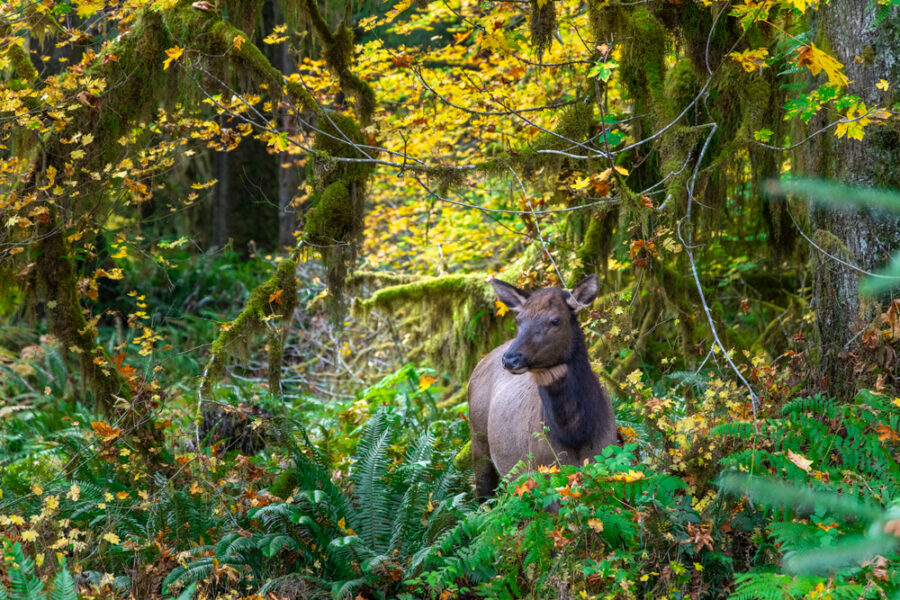
Rainforest Full Of Life – Limited Edition Fine Art Print of 6 – Derek Nielsen Photography
Why Does Real Wildlife Photography Still Matter?
Real wildlife photography matters because it connects people with animals, ecosystems and experiences that genuinely exist in the natural world. My concern about AI-generated wildlife imagery isn’t ultimately about technology. It is about our relationship with nature. We already experience much of the natural world through phones, televisions, social media feeds and computer screens. Many of us can recognize animals living thousands of miles away while rarely noticing wildlife living just outside our homes.
Now AI can create an endless stream of fictional nature for us. But there is no substitute for the real thing. There is no substitute for standing quietly in a forest and realizing something is watching you, hearing a whale breathe, watching an elephant family interact, seeing a bird begin its migration or realizing that the animal in front of you has spent its entire life navigating a world completely different from your own.
And there is no substitute for knowing that the wildlife photograph you are looking at is something you can actually experience. This is where wonder comes from. You can imagine what it would feel like to actually be there.
The Future of Photography in the Age of AI
As AI-generated images become increasingly realistic, transparency and authenticity will become essential to maintaining trust in photography. The future will undoubtedly bring extraordinary new ways to create images. Artists should explore them. Technology will continue changing how photographers work and how all of us experience visual culture. But I hope we preserve a place for something wonderfully simple: A photographer with a camera, looking through a lens, observing a real moment to be shared with the world.
Because in an age when almost any image can be invented, knowing that something actually happened may be more powerful than ever. AI-generated images are making it increasingly difficult to distinguish real photography from artificially created imagery. For wildlife photography in particular, this raises an important question: if an image looks completely real but the animal, landscape or moment never existed, why was it created? What purpose does it serve?
As AI becomes better at manufacturing convincing versions of those encounters, authenticity may become one of the most important qualities a photograph can possess.
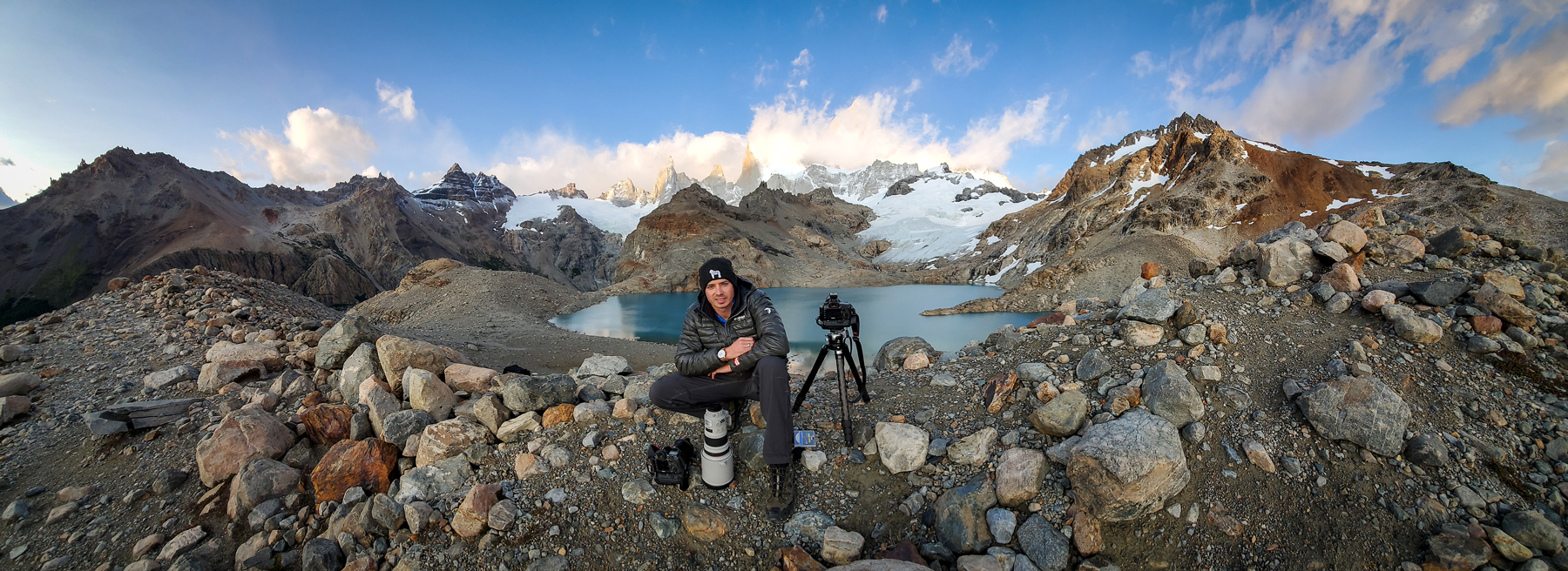
Hello! I'm Derek.
DEREK NIELSEN PHOTOGRAPHY RAISES AWARENESS ABOUT THE GLOBAL NEED FOR CONSERVATION THROUGH PHOTOGRAPHY AND DONATES UP TO 15% OF ALL SALES BACK TO ENVIRONMENTAL ORGANIZATIONS AROUND THE WORLD.